A Comprehensive Guide to Back Pain Arthritis Treatment
Understanding Spinal Osteoarthritis and How It Causes Back Pain
Effective back pain arthritis treatment focuses on easing joint stiffness, reducing inflammation, and strengthening the muscles that support your spine. Most care plans rely on a stepped approach combining physical therapy, low-impact exercise, weight management, and anti-inflammatory medications. When daily discomfort persists, interventional procedures such as targeted facet joint injections or radiofrequency ablation provide longer-lasting relief by calming irritated nerves directly at the source.
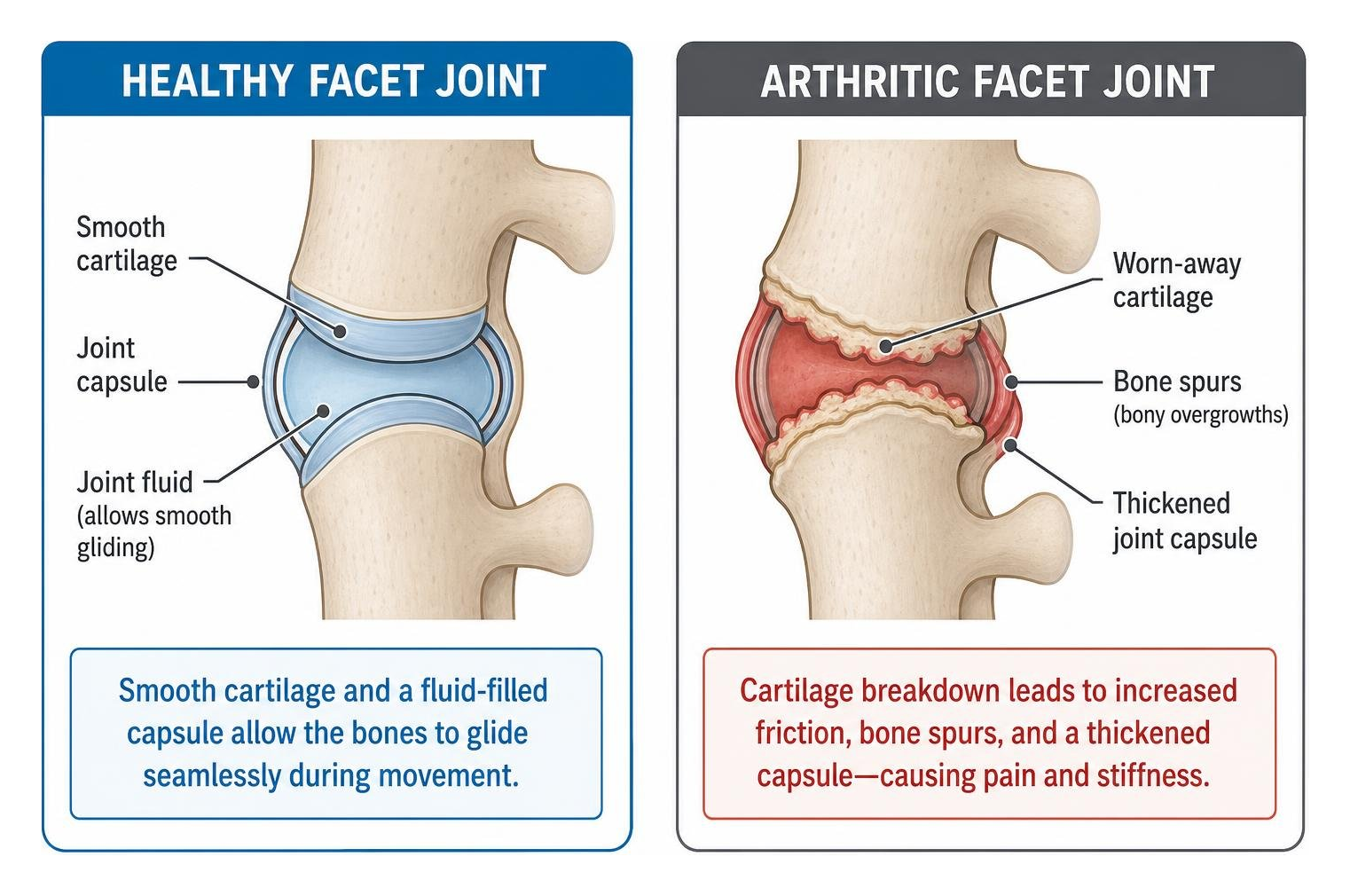
Spinal osteoarthritis develops inside the small stabilizing hinges located at the back of each spinal segment, known as facet joints. In a healthy spine, smooth cartilage coats these joints, and a thin capsule filled with fluid allows the bones to glide seamlessly as you bend, twist, or arch backward. Over time, mechanical stress and ongoing low-grade inflammation wear this protective cartilage away.
When the cartilage breaks down, the underlying bone experiences increased friction. The body often responds by creating bone spurs—smooth bony overgrowths that develop along joint edges—and thickening the joint capsule. This entire degenerative process is known as facet joint arthropathy (arthritis of the spinal joints). As the joint surfaces become rough and inflamed, daily movements like standing upright, walking through a theme park, or getting out of a low chair can trigger an aching, localized stiffness across the lower back. For an in-depth clinical look at how these structural changes evolve, refer to the Spinal Osteoarthritis Clinical Overview or learn more about our approach to managing Arthritis of the Spine.
Differentiating Spinal Arthritis from Other Spinal Conditions
Because the spine is an interconnected column of bones, cushions, ligaments, and nerves, different spinal issues frequently produce overlapping symptoms. Finding the right relief depends entirely on pinpointing the exact source of your pain:
- Facet Joint Arthritis: Produces an ache localized directly over the spine or off to one side. The discomfort typically worsens when arching backward or twisting and tends to feel stiffest during the first twenty minutes after waking up.
- Degenerative Disc Disease: Focuses on the rubbery shock absorbers between your spinal bones. Pain from disc wear usually intensifies when bending forward, sitting for long periods, or lifting heavy objects.
- Herniated Disc: Occurs when the inner gel of a spinal cushion pushes outward through its tough outer ring. This can cause a sudden, sharp pain in the back that often radiates into the buttocks or leg.
- Spinal Stenosis: Involves a narrowing of the open spaces within your spine. It frequently causes cramping, heaviness, or numbness in both legs during walking or standing that quickly eases when you sit down or lean forward over a grocery cart.
- Sacroiliitis (SI Joint Pain): Affects the large weight-bearing joints connecting your lower spine to your pelvis. It commonly generates sharp or aching pain low in the buttocks and upper thigh, frequently aggravated by climbing stairs or shifting weight onto one leg.
Diagnosing Facet-Mediated Pain and the Limitations of Imaging
One of the most surprising realities of spinal care is that imaging scans do not tell the whole story. A person can have significant joint wear visible on an X-ray or MRI and experience very little discomfort, while someone with minimal visible changes might struggle with severe, daily stiffness. Because age-related joint changes are common even in people without symptoms, an imaging scan alone cannot prove that a specific joint is the source of your symptoms.
When clinicians suspect Facet Joint Syndrome, they combine hands-on physical exams—such as checking for tenderness directly over the joints and testing range of motion—with targeted diagnostic tests. The gold standard for confirming that a facet joint is causing your discomfort is a diagnostic medial branch block. During this outpatient procedure, a physician places a small amount of numbing medicine precisely around the tiny nerve branch that carries pain signals from that specific joint. If your everyday back pain drops significantly while the local anesthetic is active, it confirms that the numbing agent reached the exact source of the problem.
Non-Pharmacological and Conservative Back Pain Arthritis Treatment
The most dependable long-term foundation for managing spinal arthritis does not come from a prescription bottle or an operating room. It starts with active, non-surgical habits that restore joint flexibility, reduce strain, and rebuild strength.
As highlighted in the WHO Guidelines for Low Back Pain Management, modern back care embraces a comprehensive approach. This means addressing not just the physical joints, but also daily movement patterns, sleep quality, stress levels, and emotional wellness. Practical steps like adjusting your workstation setup, taking frequent standing breaks, and applying warmth to loosen tight back muscles before morning activities can substantially reduce daily discomfort.
The Role of Weight Management and Therapeutic Exercise
Every pound of body weight places magnified mechanical force on the lower back during walking, lifting, and bending. Carrying extra weight around the midsection pulls the pelvis forward, increasing the arch in the low back and putting direct pressure on the facet joints. Lightening that load removes continuous stress from these inflamed hinges, allowing surrounding tissues to calm down.
Simultaneously, regular exercise acts as natural joint lubrication. Because joint cartilage lacks its own blood supply, it relies on movement to pump oxygen and nutrients into the tissue. An individualized physical therapy program typically emphasizes:
- Core Muscle Strengthening: Building endurance in the abdominal, back, and hip muscles to act as an internal brace for the spinal column.
- Gentle Flexibility Routines: Stretching tight hip flexors, hamstrings, and spinal rotators to restore natural movement without overloading stiff joints.
- Low-Impact Aerobic Conditioning: Activities like brisk walking, water aerobics, or stationary cycling that boost circulation and stamina without jarring the spine.
These lifestyle fundamentals are strongly supported by the Evidence-Based Osteoarthritis Care Guidelines, which emphasize exercise and weight management as essential first steps.
First-Line Medications in Back Pain Arthritis Treatment
When daily discomfort flares up, medications can provide temporary relief to help you stay active and participate fully in physical therapy. The goal is always to use the lowest effective dose for the shortest duration necessary:
- Topical Pain Relievers: Creams, gels, and patches containing nonsteroidal anti-inflammatory medicines (such as diclofenac) or capsaicin (a warming extract from chili peppers) can be applied directly over the painful area to quiet local nerve endings with minimal whole-body absorption.
- Oral Anti-Inflammatory Medicines (NSAIDs): Over-the-counter or prescription options like ibuprofen, naproxen, or celecoxib help lower swelling in the joint lining. Because routine use can irritate the stomach lining or affect kidney function, they should be taken with food and monitored closely by your doctor, sometimes alongside a protective stomach medication.
- Nerve-Pain and Mood Modulators: Medications such as duloxetine can help tone down persistent pain signals in the central nervous system, offering an alternative for individuals who cannot take anti-inflammatory pills.
- A Note on Common Pain Relievers: While acetaminophen (paracetamol) is often used for general aches, clinical evidence shows it provides limited benefit for spinal joint inflammation.
Reviewing practical Treatments for Osteoarthritis from the Arthritis Foundation can help you understand how these medications fit into an overall wellness plan.
Interventional Procedures and Targeted Injection Therapies
When physical therapy and medications are not enough to calm persistent joint irritation, targeted procedures performed by Pain Management specialists can deliver relief directly to the source of pain.
| Procedure | Primary Target | Typical Duration of Relief | Best Suited For |
|---|---|---|---|
| Facet Joint Injections | Inside or around the inflamed facet joint capsule | Several weeks to a few months | Localized spinal stiffness, acute facet flare-ups |
| Epidural Steroid Injections | The epidural space surrounding irritated spinal nerves | Several weeks to months | Leg pain, sciatica, and radiating nerve compression |
| Radiofrequency Ablation (RFA) | Medial branch sensory nerves carrying pain signals | 8 to 12 months (often longer) | Confirmed chronic facet joint pain after positive diagnostic blocks |
Advanced Procedural Back Pain Arthritis Treatment and Injections
Interventional treatments are tailored to the exact type of tissue generating your symptoms:
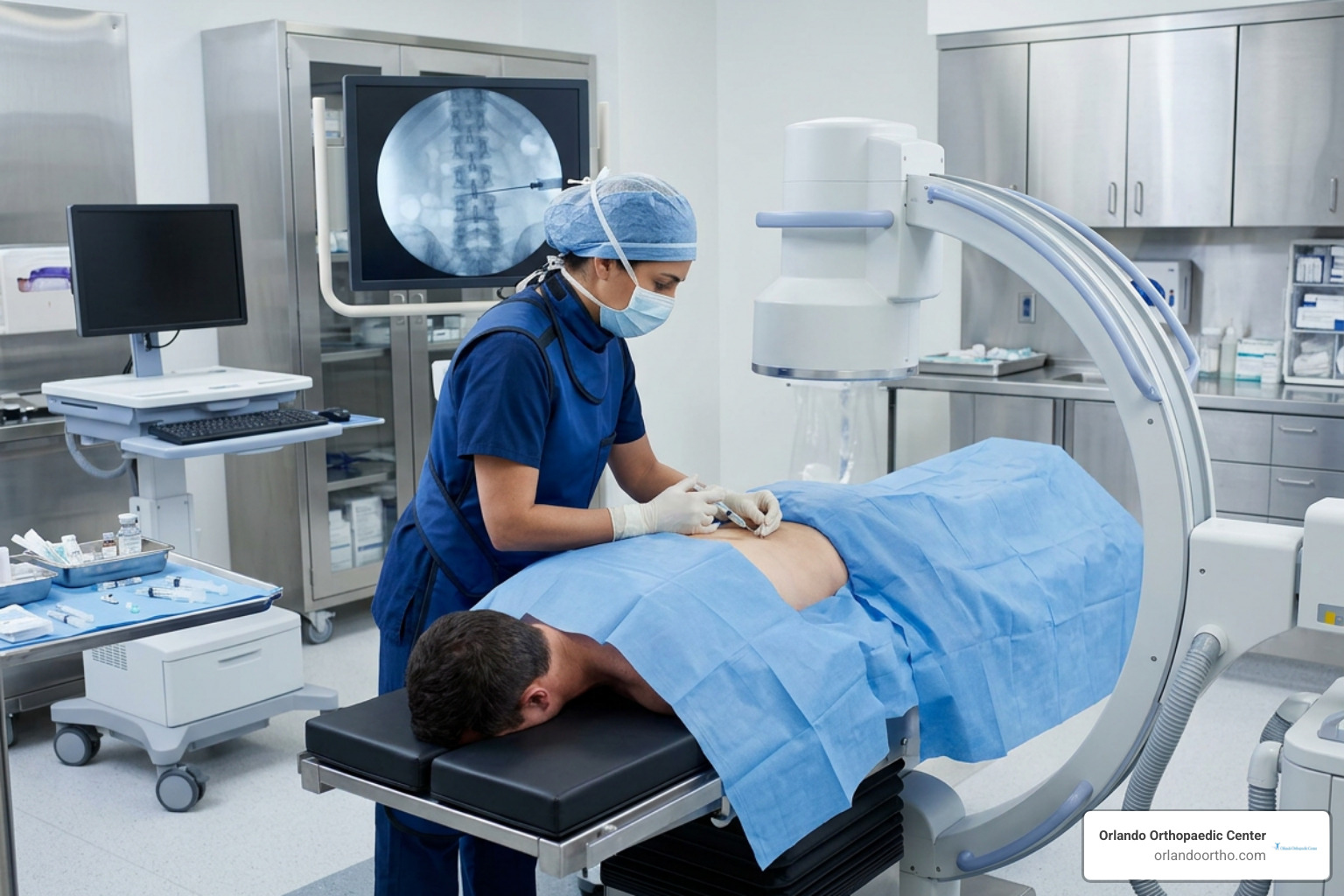
- Facet Joint Injections: Under real-time X-ray guidance (fluoroscopy), a specialist places a small dose of anti-inflammatory cortisone and local anesthetic directly into or around the arthritic facet capsule to ease swelling and stiffness.
- Epidural Steroid Injections: When arthritic bone spurs narrow the exit pathways for nerves, causing Radiculopathy (nerve irritation that shoots pain, tingling, or numbness down the leg), an epidural injection bathes the irritated nerve root in concentrated anti-inflammatory medication to calm radiating symptoms.
- Radiofrequency Neurotomy (Ablation): If a temporary numbing block confirms that your facet joints are the primary pain generator, a doctor can use a specialized needle that emits gentle heat energy to temporarily deactivate the sensory nerve sending pain signals from that joint. This technique does not weaken back muscles or alter spinal mechanics, and it frequently provides relief lasting 8 to 12 months.
Safety Considerations and Contraindications for Steroid Injections
While image-guided injections are safe and routine, steroid medications must be used thoughtfully, especially if you manage underlying health conditions:
- Diabetes: Corticosteroids can cause a temporary rise in blood sugar levels for several days following an injection. Patients should monitor their glucose readings closely and discuss insulin or medication adjustments with their primary care doctor.
- High Blood Pressure: Some individuals experience a mild, temporary increase in blood pressure due to fluid retention.
- Bone Density Concerns: Frequent or repeated steroid injections over short timeframes can contribute to bone thinning (osteoporosis), which is why specialists limit how often these procedures are performed each year.
- Blood-Thinning Medications: Because injections involve placing a small needle near delicate spinal tissues, patients taking blood thinners will need coordinated clearance from their prescribing doctor to pause their medication safely before the procedure.
Advanced Neuromodulation and Surgical Solutions for Severe Spinal Arthritis
For the vast majority of people, conservative care and targeted injections successfully keep spinal arthritis manageable. However, when joint degeneration causes severe nerve narrowing or spinal instability that resists non-surgical treatment, advanced interventions may be considered.

A Spinal Cord Stimulator is a small implantable device that sends mild electrical impulses to the spinal cord to interrupt chronic nerve pain signals before they reach the brain. While stimulation is primarily designed for persistent nerve pain following prior surgery or complex regional pain rather than isolated mechanical joint arthritis, it remains an important option for carefully selected individuals with chronic nerve symptoms. In rare, specialized circumstances, targeted drug delivery pumps may be discussed for severe, intractable conditions.
Indications for Surgical Consultation and Decompression
Surgery is rarely the first step for spinal arthritis alone, but it becomes necessary when structural changes threaten nerve function or spinal stability. You should be evaluated by a spine surgeon if you develop:
- Progressive muscle weakness in the legs, feet, or arms (such as foot drop or trouble gripping objects).
- Difficulty with balance, walking coordination, or fine motor skills.
- Sudden loss of bowel or bladder control, or numbness around the groin (which requires emergency medical care).
- Severe pain and mobility loss that persists despite dedicated physical therapy, lifestyle changes, and interventional care.
When surgery is needed, procedures are chosen based on your anatomy:
- Laminectomy: Removing a small section of the bony roof of the spinal canal to relieve pressure on compressed spinal nerves.
- Foraminotomy: Widening the small side tunnels where individual nerve roots exit the spine, clearing away bone spurs.
- Spinal Fusion: Joining two or more vertebrae together with bone graft and supportive hardware to eliminate painful friction in severely unstable or worn joints.
Choosing the right specialist is an important step. Learn more about the differences between providers in our guide on Orthopaedic Spine Surgeon Versus Neurosurgeon Referral for Spine Surgery.
Frequently Asked Questions about Back Pain Arthritis Treatment
How long does pain relief last after facet joint radiofrequency ablation?
Pain relief following radiofrequency ablation typically lasts between 8 and 12 months, and in many cases, patients experience comfort for over a year. The treated microscopic sensory nerve fibers slowly regenerate over time. If the original aching pain gradually returns once the nerve grows back, the procedure can safely be repeated with similar rates of success.
Can spinal cord stimulation relieve pain caused directly by spinal arthritis?
Spinal cord stimulation is designed to treat neuropathic pain (burning, tingling, or shooting nerve pain), such as persistent leg pain following disc injuries or prior surgery. It is not generally effective for the dull, mechanical aching caused directly by arthritic joint friction in the back. Your physician will perform a comprehensive exam to determine whether your symptoms are nerve-related or joint-related before recommending neuromodulation.
Why does severe back arthritis on an X-ray not always cause severe pain?
X-rays and scans show the structure of your spine, but they cannot show how well your body moves, how strong your supporting muscles are, or how sensitive your nerves have become. Many active adults have visible joint wear and bone spurs without feeling any symptoms at all. Conversely, small amounts of joint inflammation paired with tight muscles and irritated nerves can cause noticeable discomfort. This is why our team treats your actual symptoms and functional goals, rather than treating an X-ray image alone.
Conclusion
Managing spinal arthritis is an ongoing journey that works best with a stepped, practical approach. By starting with guided movement, core strengthening, posture adjustments, and healthy weight habits, most people can protect their joints and stay active without surgery. When flare-ups happen, targeted injections and interventional treatments can calm localized pain and help you return to the activities you love.
Orlando Orthopaedic Center’s surgeons treat bones, joints, and soft tissue, offering comprehensive care tailored to your unique lifestyle. If back stiffness or aching is keeping you on the sidelines, schedule a Spine Care Consultation with our team to start building your personalized treatment plan today.