How to Avoid Back Pain Before It Got Your Back
Back Pain Prevention Tips That Actually Work (Before It’s Too Late)
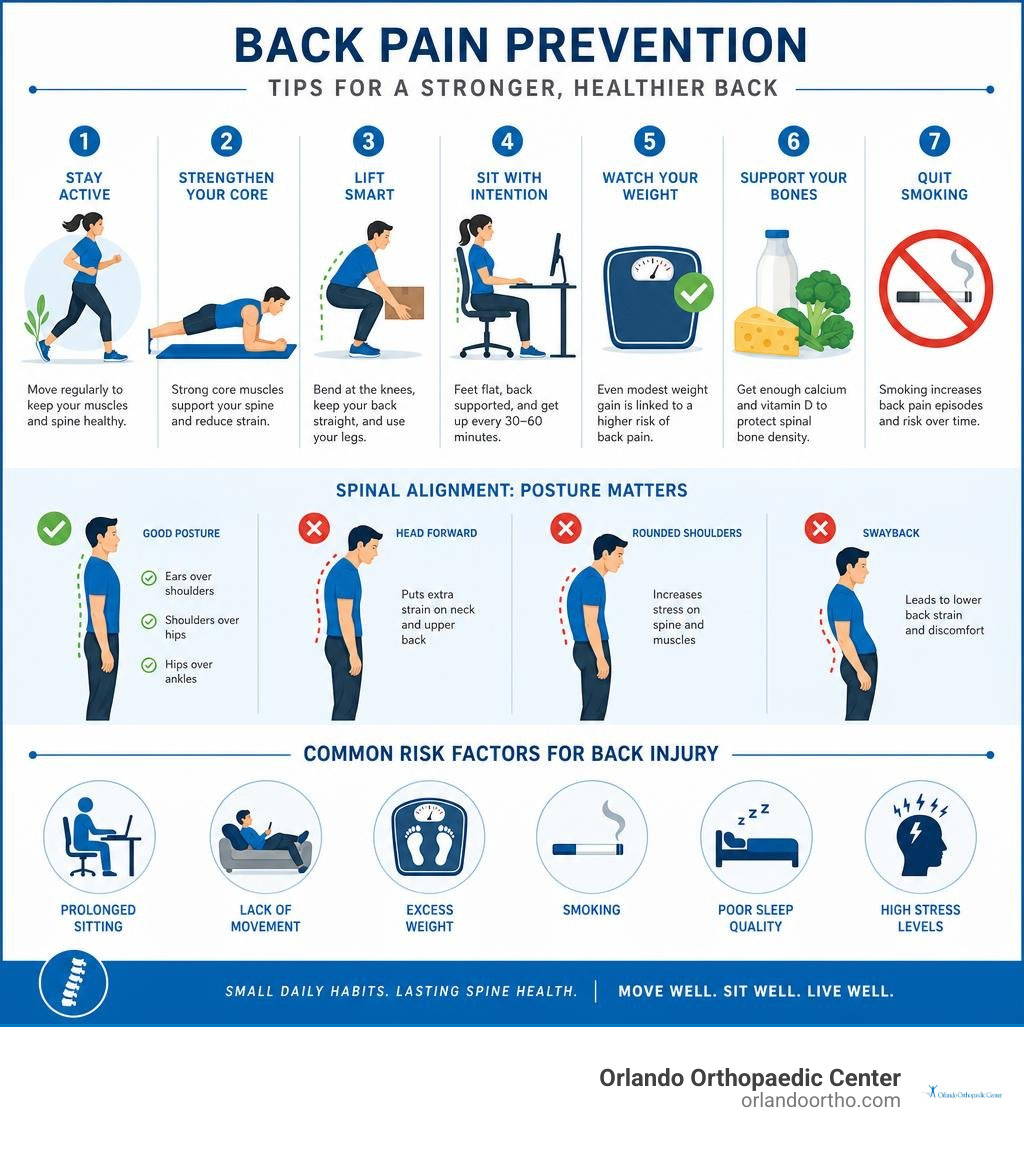
If you’re looking for back pain prevention tips that fit into a real, busy life, here’s the short version:
- Stay active – Aim for 150 minutes of moderate aerobic activity per week.
- Strengthen your core – Do muscle-strengthening and stretching exercises at least 2 days a week.
- Lift smart – Bend at the knees, keep your back straight, and let your legs do the work.
- Sit with intention – Feet flat, back supported, and get up every 30-60 minutes.
- Watch your weight – Even modest weight gain is linked to a higher risk of chronic lower back pain.
- Support your bones – Get enough calcium and vitamin D to protect spinal bone density.
- Quit smoking – Smokers have more frequent back pain episodes, and the risk rises with how much they smoke.
Back pain is incredibly common. Four out of five Americans will experience it at some point in their lives. And once it starts, it can be hard to shake — up to 20% of people with a new episode go on to develop chronic, long-lasting symptoms.
The good news? Most back pain is preventable.
Simple, everyday habits — how you move, sit, lift, and even eat — have a direct impact on whether your spine stays healthy or starts to break down. Preventing back pain is genuinely easier than treating it after the fact.
This guide walks you through exactly what to do, step by step.
Essential Physical Activity and Daily Movement Strategies
When your back starts aching, your first instinct might be to crash on the couch and stay motionless until the pain subsides. However, dynamic movement is actually your spine’s best friend. Consistent physical activity keeps the spinal structures lubricated, improves blood flow to soft tissues, and reinforces the surrounding muscles that absorb everyday impact.
The key to long-term spinal support lies in balanced physical training. When one group of muscles—such as your hip flexors or lower abdominals—is significantly weaker or tighter than its opposing group, your spinal column absorbs the uneven tension. This imbalance forces your lower lumbar vertebrae to twist or compress unnaturally during routine motions.
Building a simple routine that blends strength, flexibility, and aerobic movement creates a protective corset around your lower back. Dedicated physical therapy regimens often focus on key movements like:
- The Bridge: Lying on your back with knees bent, lifting your hips 4 to 6 inches off the ground to strengthen the glutes, hamstrings, and lower lumbar stabilizers.
- Knee-to-Chest Stretches: Gently pulling one knee at a time toward your chest while pressing your lower back flat against the floor to relieve compressive tension.
- Pelvic Tilts: Tightening your abdominal muscles to tilt the pelvis upward and flatten the curve of your lower spine against the mat.
- Lower Back Rotational Stretches: Keeping your shoulders flat while rolling bent knees slowly side to side.
Incorporate gentle routines, such as stretching and strengthening exercises to relieve and prevent lower back pain – Harvard Health, into your weekly schedule to build resilient lumbar muscles.
Back Pain Prevention Tips for Active Lifestyles: Exercise and Walking
You do not need to run marathons or lift heavy barbells to build a resilient spine. In fact, low-impact cardio is one of the most effective tools for preventing chronic lower back discomfort.
Current public health guidelines recommend accumulating at least 150 minutes of moderate-intensity aerobic activity every week, alongside targeted muscle-strengthening exercises on 2 or more days.
Among simple exercises, low-impact walking stands out as a powerful tool for back health:
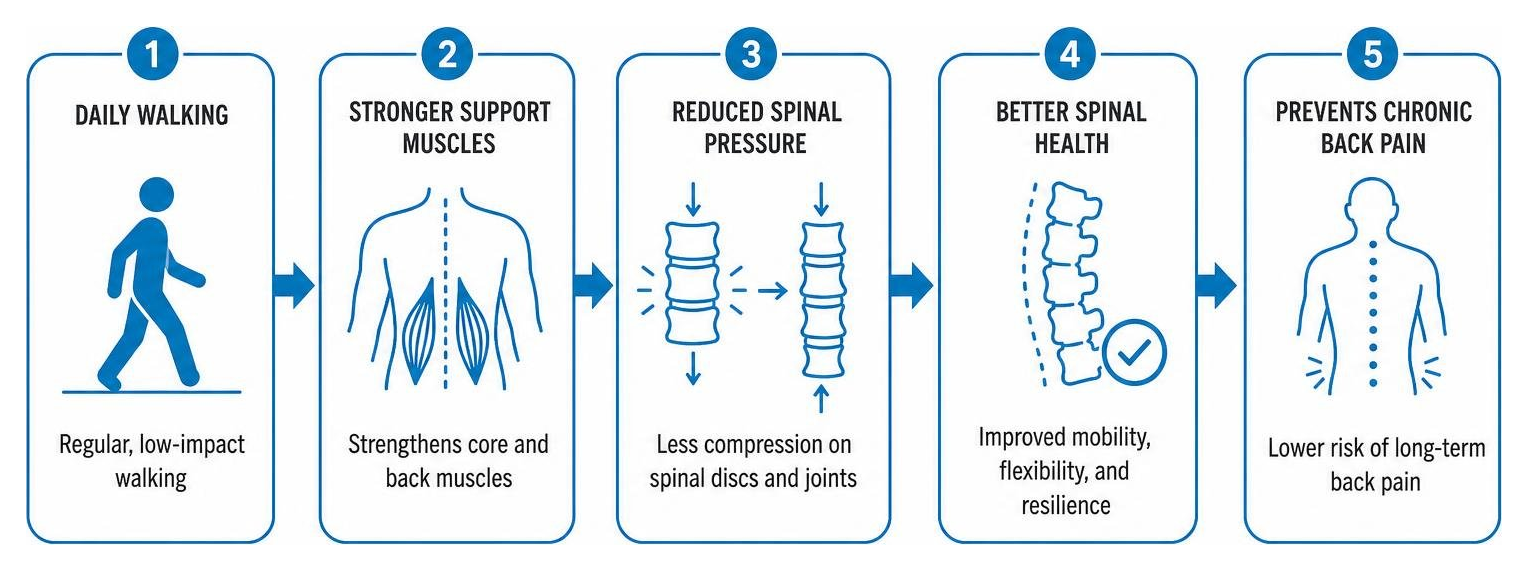
A major study following over 11,000 adults found that individuals who accumulated higher daily walking volumes—aiming for 90 to 120 minutes or more across short increments—had a significantly lower risk of developing chronic, long-lasting back pain compared to sedentary individuals. Interestingly, the total volume of movement mattered far more than walking speed, proving that consistent, gentle steps throughout the day protect your spine better than intense, sporadic bursts of exertion.
Complementing daily walking with mind-body movement practices further enhances your spinal protection:
- Yoga: Poses such as Downward Dog, Cat-Cow, Cobra, and Child’s Pose gently lengthen tight hamstrings and hip flexors while activating deep core stabilizers.
- Tai Chi: Slow, deliberate rotational movements foster exceptional postural balance, joint fluidity, and leg strength without putting sudden shear forces on spinal discs.
- Mindfulness Practice: Mental stress causes subconscious physical muscle bracing, particularly across the upper shoulders and lumbar region. Regular breathwork and mindfulness help quiet these stress signals, releasing tension before it leads to painful spasms.
Unsure where your spinal strength currently stands? Take our quick, interactive Back Pain Quiz to assess your personal risk factors and get customized movement insights.
Proper Biomechanics: Ergonomics, Lifting, and Posture
Your spine consists of 33 vertebrae layered with sensitive nerves, intervertebral discs, ligaments, and tendons. Discs act as natural shock absorbers, but bad movement mechanics can squeeze them like water balloons, causing them to bulge or tear.

Whether you are carrying heavy groceries, picking up a toddler, or simply sitting in your car, maintaining proper spinal biomechanics preserves your spine’s natural curve and prevents structural wear.
Essential Back Pain Prevention Tips for Daily Posture and Safe Lifting
Good posture isn’t about standing stiff as a board—it’s about aligning your ears, shoulders, and hips so gravity spreads your weight evenly across your body.
1. Standing and Sitting Posture
When standing, distribute your weight evenly across both feet, avoid locking your knees, and keep your shoulders relaxed back and down rather than slouched forward. When sitting, keep your back flush against the backrest, your feet flat on the floor, and your knees level with or slightly higher than your hips.
2. Safe Lifting Biomechanics
Most acute back injuries happen during simple everyday tasks, like lifting a heavy laundry basket or a box off the ground. The cardinal rule of safe lifting is to use your powerful hip and leg muscles rather than hinging at your waist.
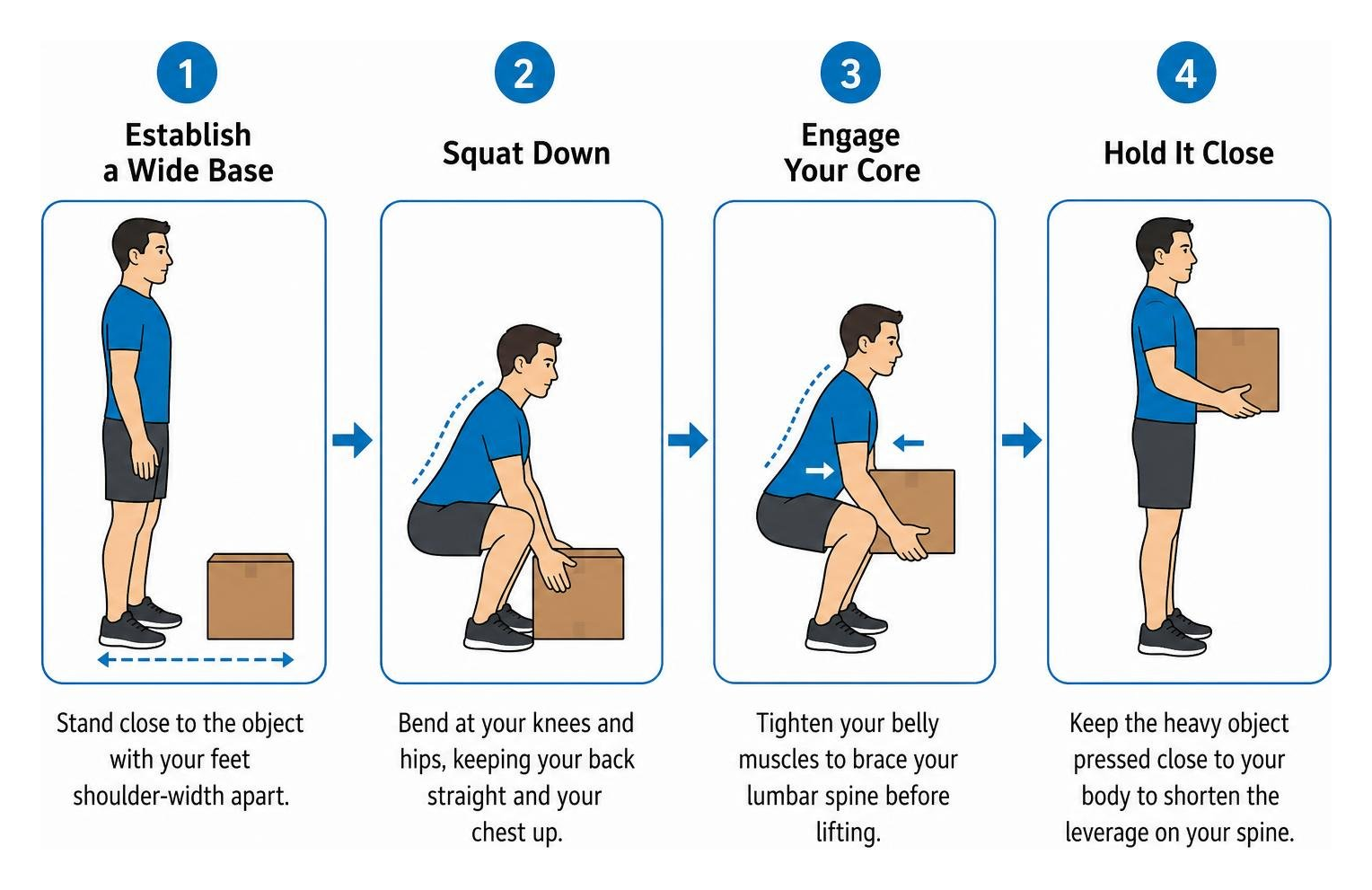
Follow these rules whenever picking up heavy items:
- Establish a Wide Base: Stand close to the object with your feet shoulder-width apart.
- Squat Down: Bend at your knees and hips, keeping your back straight and your chest up.
- Engage Your Core: Tighten your belly muscles to brace your lumbar spine before lifting.
- Hold It Close: Keep the heavy object pressed close to your body to shorten the leverage arm on your spine.
- Never Twist While Lifting: Pivot with your feet to turn left or right. Bending and twisting at the same time is the fastest route to a painful injury or a severe structural complication like a Herniated Disc.
Learn more practical posture strategies in this collection of tips to prevent and relieve lower back pain.
Daily Ergonomics and Workstation Setup: Back Pain Prevention Tips for Desk Workers
Sitting for hours at a desk puts double the pressure on your spinal discs compared to standing upright. When you slouch, your abdominal muscles relax completely, dumping your entire upper body weight onto your lower lumbar spine and stretching your spinal ligaments beyond their natural capacity.
To build a back-friendly workstation:
- Monitor Position: Position your screen directly in front of you at eye level, about an arm’s length away, so your neck stays neutral instead of tilting down.
- Chair Support: Use an office chair with built-in or adjustable lumbar support that fills the natural arch of your lower back.
- Arm and Leg Alignment: Adjust your chair height so your elbows rest at a 90-degree angle on the armrests and your feet sit flat on the floor or on a stable footrest.
- Movement Intervals: Take a short movement break every 30 to 60 minutes. Stand up, stretch your hip flexors, or take a quick 2-minute lap around the office to relieve pressure on your intervertebral discs.
Here is how static workplace habits compare with dynamic, posture-friendly habits:
| Ergonomic Factor | Static Sitting Habits (High Risk) | Dynamic Workstation Habits (Low Risk) |
|---|---|---|
| Lumbar Support | Slouching forward with zero lower back contact | Chair backrest adjusted to firm, natural lumbar curve |
| Movement Frequency | Remaining seated continuously for 2 to 4+ hours | Standing or walking for 2–3 minutes every 30–60 minutes |
| Foot & Leg Placement | Legs crossed, feet dangling, or sitting on feet | Feet flat on floor, knees level with or slightly above hips |
| Workstation Options | Fixed-height desk causing neck & shoulder strain | Sit-stand adjustable desk alternating postures hourly |
Systematic Health Factors: Nutrition, Weight, and Lifestyle
Preventing back pain goes beyond muscle mechanics—it also depends on systemic habits like your diet, weight, and lifestyle choices.
- Weight Management: Carrying extra weight, especially around your midsection, pulls your pelvis forward and puts constant extra stress on your lower back muscles and joints. A 2021 study highlighted a direct link between weight gain and chronic lower back pain, showing that even small weight increases raise your risk for ongoing discomfort.
- Bone Density and Diet: Your spinal column relies on strong vertebrae. Eating foods rich in calcium and vitamin D—like dairy products, leafy greens, fortified cereals, salmon, and tuna—helps keep your bones dense and lowers the risk of fractures and osteoporosis.
- Smoking Cessation: Smoking reduces circulation throughout your microvascular network, cutting off vital nutrient delivery to your spinal discs and accelerating disc degeneration. Frequent coughing from smoking also spikes pressure inside your abdomen, putting extra strain on spinal nerves and raising your risk for conditions like Sciatica.
Find comprehensive guidance on lifestyle habits and spinal health at Harvard Health’s Back Pain Hub.
Acute vs. Chronic Back Pain: Knowing the Differences
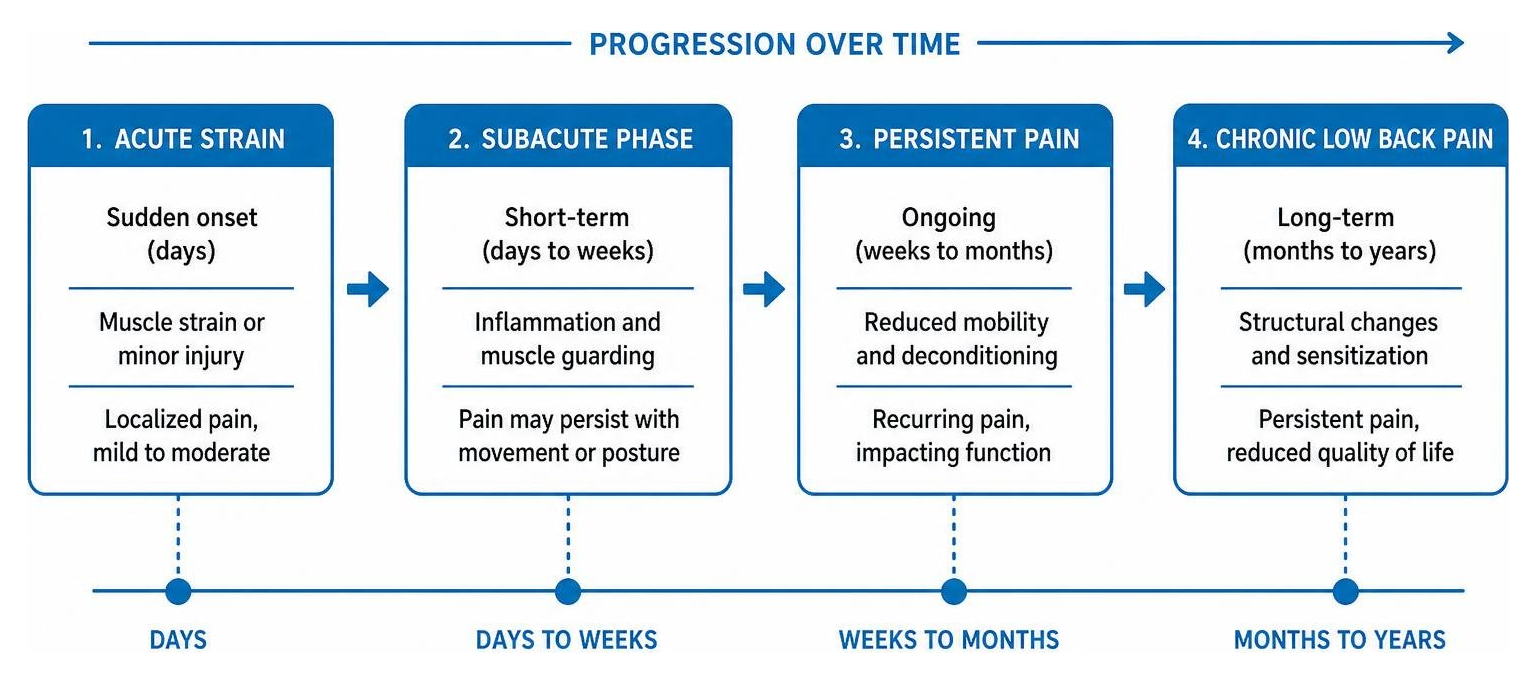
Not all back pain behaves the same way, and understanding whether you are dealing with an acute strain or a chronic condition helps you choose the right steps for relief.
Acute Back Pain
- Duration: Typically lasts from a few days to a few weeks, usually resolving within 6 to 8 weeks.
- Common Causes: Sudden muscle strains, minor sports injuries, or overexertion during lifting.
- Primary Prevention Strategy: Focuses on safe biomechanics, short-term activity modifications, applying heat or cold therapy, and gentle stretching. Prolonged bed rest should be avoided, as staying gently active speeds up recovery.
Chronic Back Pain
- Duration: Persists or recurs for 12 weeks (3 months) or longer.
- Common Causes: Deep structural issues like osteoarthritis, degenerative disc disease, spinal stenosis, or long-standing postural imbalances.
- Primary Prevention Strategy: Requires long-term, comprehensive lifestyle changes, including physical therapy, daily walking, weight management, and mind-body conditioning.
While up to 20% of acute cases can turn chronic, structured non-surgical care—like physical therapy, targeted exercise, and posture adjustments—successfully resolves the vast majority of back pain without needing invasive surgery. Explore personalized strategies with Harvard Health’s plan to relieve back pain and bust common myths using our guide to Back Pain Mythbusters.
When to See a Doctor: Red Flag Symptoms and Professional Care
Most lower back stiffness resolves on its own with rest, light walking, and gentle care. However, certain symptoms indicate a potential medical emergency that requires immediate evaluation by a specialist.
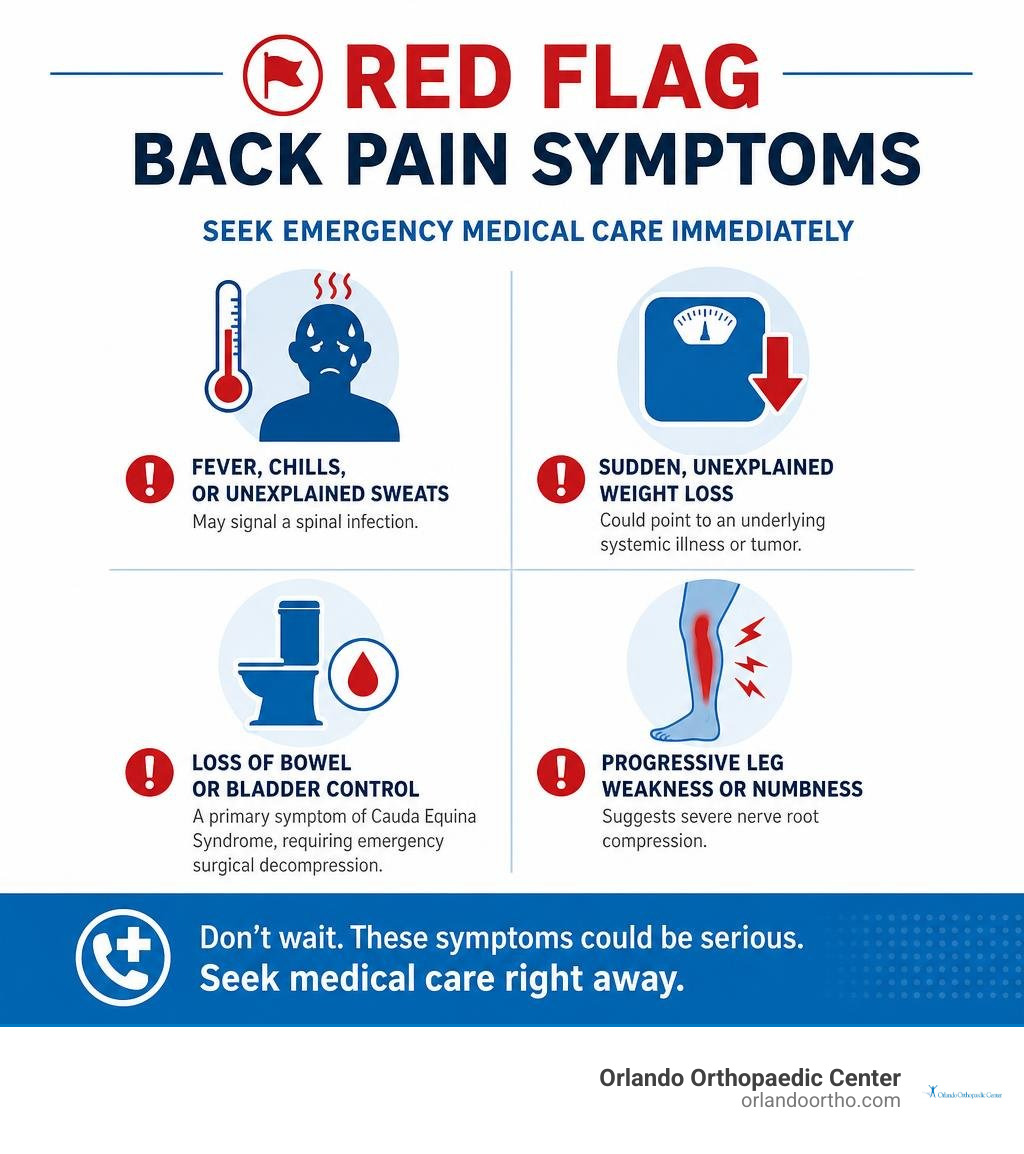
Seek medical care immediately if your back pain is accompanied by any of these red flag symptoms:
- Fever, Chills, or Unexplained Sweats: May signal a spinal infection.
- Sudden, Unexplained Weight Loss: Could point to an underlying systemic illness or tumor.
- Loss of Bowel or Bladder Control: A primary symptom of Cauda Equina Syndrome, requiring emergency surgical decompression.
- Progressive Leg Weakness or Numbness: Suggests severe nerve root compression, such as a severe Compressed Spinal Nerve.
- History of High-Impact Trauma: Such as a major fall or motor vehicle collision.
If you are wondering whether your discomfort requires specialized medical attention, consult our detailed medical overview on Is Back Pain Serious? to determine the right level of care.
Frequently Asked Questions About Preventing Back Pain
What is the most effective exercise to protect your lower back?
There is no single “magic” exercise, but core-strengthening movements that build structural balance—such as pelvic tilts, bird-dogs, planks, and bridges—are exceptionally effective. Combining these core exercises with low-impact cardiovascular activity like daily walking provides robust, long-term protection for your lumbar spine.
How often should office workers take movement breaks?
Office workers should stand up and change positions every 30 to 60 minutes. Brief 2-minute movement breaks—such as walking to get a glass of water, stretching your hip flexors, or doing standing back extensions—relieve pressure on your lower back discs and prevent muscle stiffness.
How do calcium and vitamin D help prevent spine issues?
Calcium provides the fundamental building block for bone strength, while vitamin D enables your body to absorb calcium efficiently. Adequate daily intake of both nutrients maintains strong vertebral bone density, preventing osteoporosis and spinal compression fractures as you age.
Conclusion
Protecting your spine is a lifelong journey built on small, consistent choices. By keeping your body active, practicing smart lifting techniques, setting up an ergonomic workstation, eating a balanced diet, and staying mindful of your posture, you can keep your back strong and resilient for years to come.
If back discomfort is holding you back from doing what you love, you don’t have to tackle it alone. At Orlando Orthopaedic Center, our team offers comprehensive care tailored to your unique needs. Explore our specialized Spine Care Services or visit one of our walk-in clinics across Central Florida to get expert guidance today.