Stepping in the Right Direction: How to Choose a Foot and Heel Doctor Near You
Common Conditions Treated by Foot and Ankle Specialists
To choose the right foot and heel doctor near you, look for a board-certified specialist or orthopaedic foot and ankle physician with direct experience treating your specific condition, on-site diagnostic imaging, and a full spectrum of conservative and surgical treatments. Checking patient reviews, clinic accessibility, and accepted insurance plans ensures you find the right local provider to restore your mobility.
Foot and ankle specialists treat a wide range of issues affecting the bones, ligaments, tendons, and muscles of your lower extremities. One of the most frequent complaints we see is stabbing heel pain, especially during those first painful steps out of bed in the morning. Understanding Plantar Fasciitis Causes, Symptoms, and Treatment is often the first step toward finding lasting relief from this inflammation of the thick band of tissue running along the bottom of your foot.
Structural changes in your toes can also make wearing normal shoes unbearable. Bunions—painful bony bumps that develop at the base of your big toe joint—and hammertoes—toes that abnormally curl downward at the middle joint—often cause friction, swelling, and deep aching when walking.
Athletes and active individuals frequently experience acute sports injuries. A sudden hyperextension of the big toe joint on the field might leave you wondering What is Turf Toe?, while a sudden twist on an uneven sidewalk can cause acute ligament damage. Learning the 3 Signs May Ankle Sprain helps you know when swelling, bruising, and trouble bearing weight require professional attention rather than simple rest. From stress fractures to shin splints, identifying Common Running Injuries Treat helps runners get back on track safely.
Diabetic Foot Care and Preventive Maintenance
For individuals living with diabetes, foot care is not just about staying comfortable—it is an essential part of overall health protection. Diabetes can cause peripheral neuropathy (nerve damage that leads to numbness, tingling, or loss of feeling in the feet) as well as reduced blood circulation.
When you cannot feel sensation properly, a tiny blister from a snug shoe or a small pebble inside your sneaker can go unnoticed. Without adequate blood flow to fight off bacteria and heal tissue, minor scrapes can quickly turn into open sores known as ulcers. Routine professional screenings help detect areas of high pressure, monitor circulation, manage stubborn calluses, and catch skin changes early to keep you walking safely.
Chronic Joint and Tendon Disorders
Chronic pain that lingers for months often stems from deep joint wear-and-tear or tendon strain. If you experience stiff, aching joints that worsen with weather changes or prolonged standing, exploring What is Ankle Arthritis? can shed light on why the cartilage cushioning your ankle joint is breaking down.
Tendon issues, such as tight or inflamed Achilles tendons connecting your calf muscle to your heel bone, can make climbing stairs or pushing off during a run painful. Additionally, flat feet (collapsed arches) place abnormal strain on the entire kinetic chain of your leg, leading to secondary knee, hip, and lower back aches. Tailored supportive devices and physical therapy help realign these joints to restore smooth, pain-free movement.
Finding the Best Podiatrist Doctor Near Me for Foot and Heel Pain
When foot discomfort disrupts your daily routine, finding the right specialist makes all the difference in how quickly you recover. You want a provider who not only possesses deep clinical knowledge but also listens closely to your personal activity goals, lifestyle demands, and work requirements.
Take time to research the doctor’s specific clinical experience with your condition. Whether you are an avid marathoner managing heel pain or a parent seeking care for a teenager’s sports injury, look for practices that offer on-site diagnostic testing, dedicated physical therapy, and a full spectrum of conservative and surgical treatment options. Online platforms are also a great starting point for verifying physician credentials and ratings on Healthgrades to see how past patients evaluate their care.
What Qualifications to Look for in a Podiatrist Doctor Near Me
Navigating medical credentials helps you ensure you are placing your mobility in capable hands. Here is what to check when reviewing a provider’s background:
- Doctor of Podiatric Medicine (DPM) or Orthopaedic Foot & Ankle Surgeon (MD/DO): Ensure the physician completed comprehensive graduate medical education followed by rigorous hospital surgical residency training focused specifically on the lower extremities.
- Board Certification: Look for doctors certified by recognized national specialty boards, demonstrating that they meet the highest standards of diagnostic and surgical competency.
- Specialty Sub-Training: If you are an active runner or team-sport athlete, look for providers with dedicated sports medicine experience who understand the mechanics of athletic performance and safe return-to-play timelines.
- Commitment to Continuing Education: Medicine advances rapidly; choosing providers who routinely adopt modern, evidence-based therapies ensures you receive up-to-date care.
Evaluating Patient Reviews and Practice Accessibility
Reading verified patient reviews offers valuable insights into a clinic’s daily environment. Look for feedback mentioning clear communication, doctors who avoid rushing through appointments, and office staff who are helpful and accommodating.
Accessibility is equally important. Consider practical logistics such as clinic locations close to your home or workplace, reasonable appointment wait times, and whether the practice offers walk-in options for acute injuries or virtual telehealth check-ins for routine follow-ups.
Advanced Diagnostics and Modern Treatment Technologies
Modern foot and ankle medicine relies on sophisticated tools that allow doctors to pinpoint the exact source of your pain right in the office. Digital X-rays provide immediate, high-resolution views of bones and joint spaces, while musculoskeletal ultrasound allows specialists to view moving tendons, ligaments, and soft tissue in real time without radiation.
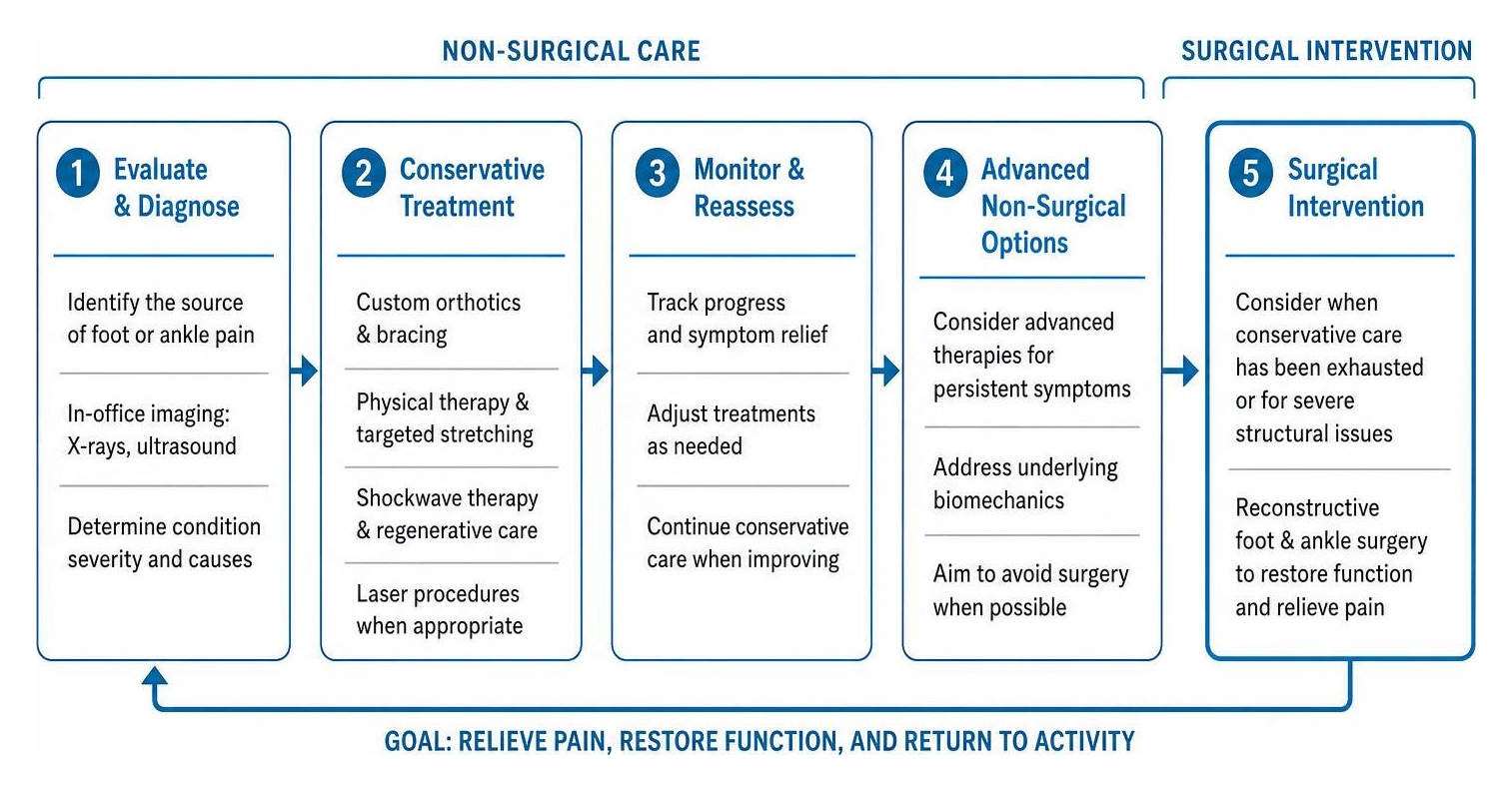
Most foot and ankle conditions respond remarkably well to conservative, non-invasive treatments. The table below outlines how common non-surgical interventions compare with surgical procedures:
| Treatment Approach | Common Indications | What Recovery & Care Involves |
|---|---|---|
| Custom Orthotics & Bracing | Flat feet, arch collapse, plantar fasciitis, tendonitis | Wearing tailored medical shoe inserts or braces to relieve joint pressure and correct gait mechanics. |
| Physical Therapy & Targeted Stretching | Ankle sprains, Achilles tightness, post-injury weakness | Guided exercises to restore strength, joint flexibility, balance, and tissue mobility without downtime. |
| Shockwave Therapy & Regenerative Care | Chronic heel spurs, stubborn plantar fasciitis, tendon inflammation | In-office acoustic pressure waves that stimulate blood flow and tissue repair without incisions. |
| Laser Procedures | Fungal toenails (onychomycosis), soft tissue lesions | Targeted light energy directed through the nail plate to clear fungal infections painlessly. |
| Reconstructive Foot & Ankle Surgery | Severe bunions, complex fractures, end-stage arthritis | Outpatient or inpatient surgery to realign bones, repair torn tendons, or fuse unstable joints. |
Exploring specialized non-surgical care like Treatment for Plantar Fasciitis often resolves severe heel symptoms without the need for invasive operations. However, when conservative methods have been exhausted or when dealing with severe structural instability, modern surgical techniques offer definitive relief.
Whether an Ankle Surgeon Provides Permanent Fix for recurring ligament instability or you need guidance to Recover from Broken Ankle trauma, your specialist will outline clear milestones for bearing weight, physical rehabilitation, and safely resuming your favorite activities.
Insurance, Referrals, and Appointment Preparation
Navigating healthcare logistics before your appointment helps prevent unexpected billing surprises and ensures your visit goes smoothly. Most comprehensive foot and ankle practices work with a broad selection of commercial health insurance networks, Medicare, and workers’ compensation programs.
If you are uninsured or choosing to pay out-of-pocket, ask the clinic front desk in advance about self-pay fee schedules and payment plan options. Transparent clinics will gladly explain the costs of exams, in-office imaging, and custom orthotic fittings prior to your visit.
How to Prepare for Your First Visit with a Podiatrist Doctor Near Me
Maximizing your consultation time is easy when you arrive prepared. To help your doctor make an accurate assessment, remember to bring:
- Your Daily Footwear: Bring the shoes you wear most frequently, including your everyday work shoes, favorite running sneakers, and any over-the-counter inserts you currently use. The wear patterns on your soles provide valuable clues about your walking mechanics.
- Medical Records and Past Imaging: If you have had recent X-rays, MRIs, or lab work performed at another medical facility, bring copies of the reports or digital imaging discs.
- A Clear Symptom Timeline: Note when your pain began, what daily movements make it worse (such as standing on hard floors or running uphill), what remedies provide temporary relief, and how the discomfort impacts your daily routine.
Frequently Asked Questions About Foot Doctors
Do I need a referral to schedule a foot consultation?
In most cases, patients with Preferred Provider Organization (PPO) insurance plans or Medicare can book an appointment directly with a foot and ankle specialist without seeing a primary care doctor first. However, if you are enrolled in a Health Maintenance Organization (HMO) plan, your insurer may require a formal referral from your primary care physician to cover your consultation. We recommend contacting your insurance carrier or our scheduling staff beforehand to confirm your specific plan requirements.
How often should patients with diabetes see a foot specialist?
If you have diabetes and have healthy feet with normal sensation and good blood flow, you should schedule a professional foot exam at least once a year. If you experience reduced sensation (neuropathy), peripheral vascular disease, foot deformities, or a history of foot sores, your doctor may recommend routine preventive checkups every 3 to 6 months to maintain healthy skin and address calluses before they break down.
When should I choose non-surgical care over foot surgery?
Non-surgical care should almost always be your first choice for conditions like heel pain, mild bunions, tendonitis, and arch strain. Conservative measures—including custom shoe inserts, physical therapy, night splints, anti-inflammatory therapies, and activity modifications—successfully relieve symptoms for the vast majority of patients. Surgery is typically reserved for acute fractures, complete tendon tears, or chronic structural issues that fail to improve after dedicated conservative management and continue to interfere with your ability to walk and work.
Conclusion
Healthy, pain-free feet are essential for an active and fulfilling life. Orlando Orthopaedic Center’s surgeons treat bones, joints, and soft tissue, providing comprehensive care tailored to your individual lifestyle and recovery goals. Whether you are dealing with chronic morning heel pain, a sudden athletic twist, or complex joint discomfort, our team creates personalized recovery plans to help you step forward with confidence. Visit our Subspecialties – Foot & Ankle page to learn more about our specialized treatments or schedule an evaluation at one of our convenient Central Florida locations today.