The Ins and Outs of Healing Plantar Fasciitis
Start Healing Plantar Fasciitis With Active, Steady Rehab
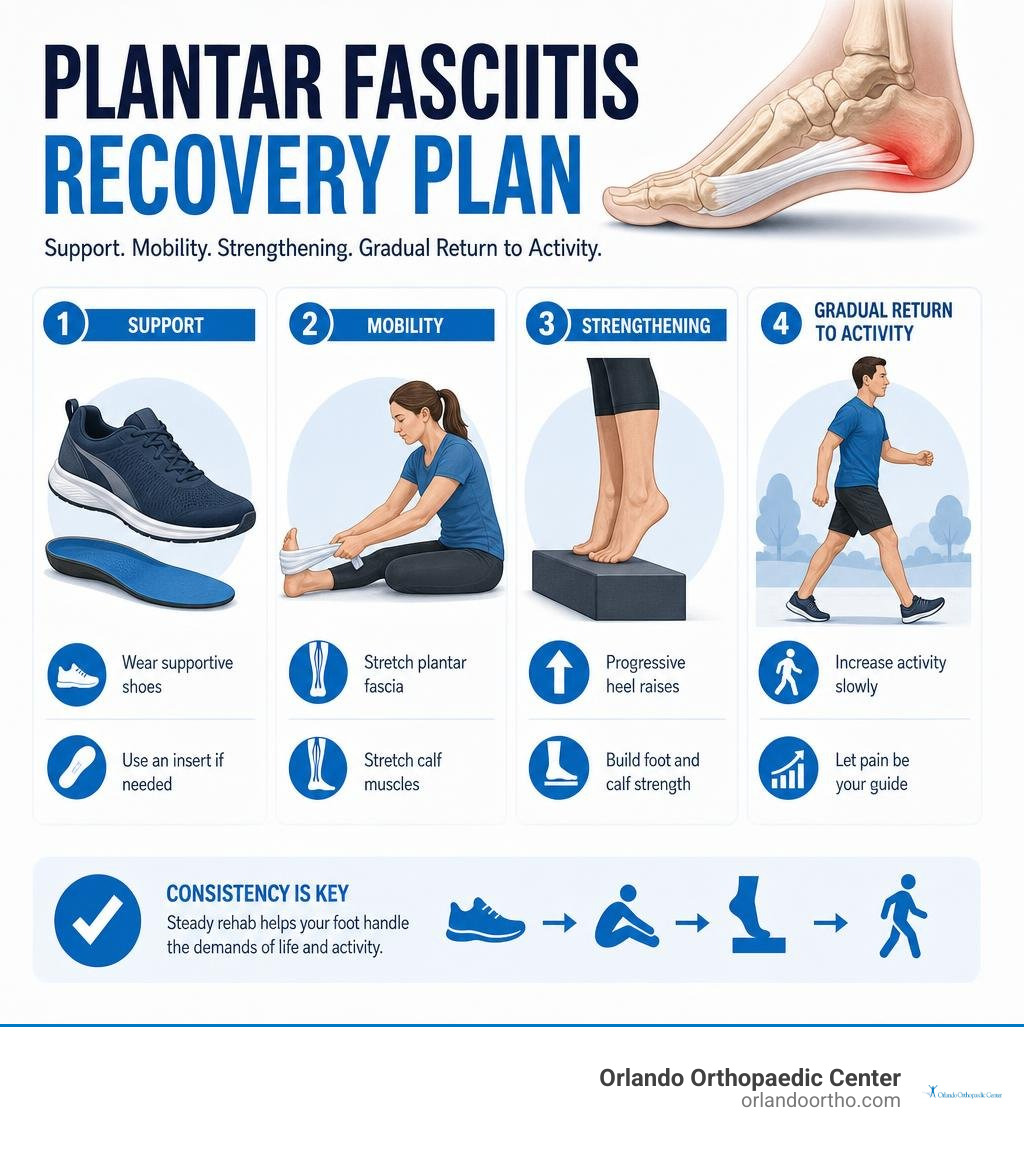
The best way to heal plantar fasciitis is to reduce the activities that sharply increase heel pain, wear supportive shoes, and steadily rebuild strength in your foot and calf. Add gentle plantar fascia and calf stretches for relief, but do not rely on rest and stretching alone. A progressive strengthening plan helps the tissue handle walking, work, exercise, and running again.
For a practical starting point:
- Pause or reduce painful high-impact activity, such as running or jumping.
- Use supportive footwear or a temporary insert instead of going barefoot on hard floors.
- Perform daily plantar fascia and calf stretches.
- Build into slow, progressive heel-raise strengthening as pain allows.
- Use ice, taping, or a night splint as short-term tools for pain and morning stiffness.
Plantar fasciitis is one of the most common reasons adults develop heel pain. It often causes a sharp ache with the first steps out of bed or after sitting. Despite its name, persistent symptoms are often less about ongoing inflammation and more about a plantar fascia that is not yet ready for the demands placed on it.
The good news: most people improve without surgery when they follow a consistent plan. This guide explains what helps, what merely masks symptoms, and when it is time to seek expert care. At Orlando Orthopaedic Center, our surgeons treat bones, joints, and soft tissue, including persistent heel pain that limits work, walking, sports, or daily life.
Understanding Heel Pain: Root Causes and Why Passive Rest Fails
To solve heel pain, it helps to understand the thick band of tissue running along the bottom of your foot. This band, called the plantar fascia, acts like a strong shock-absorbing bowstring that supports your arch every time your foot strikes the ground.
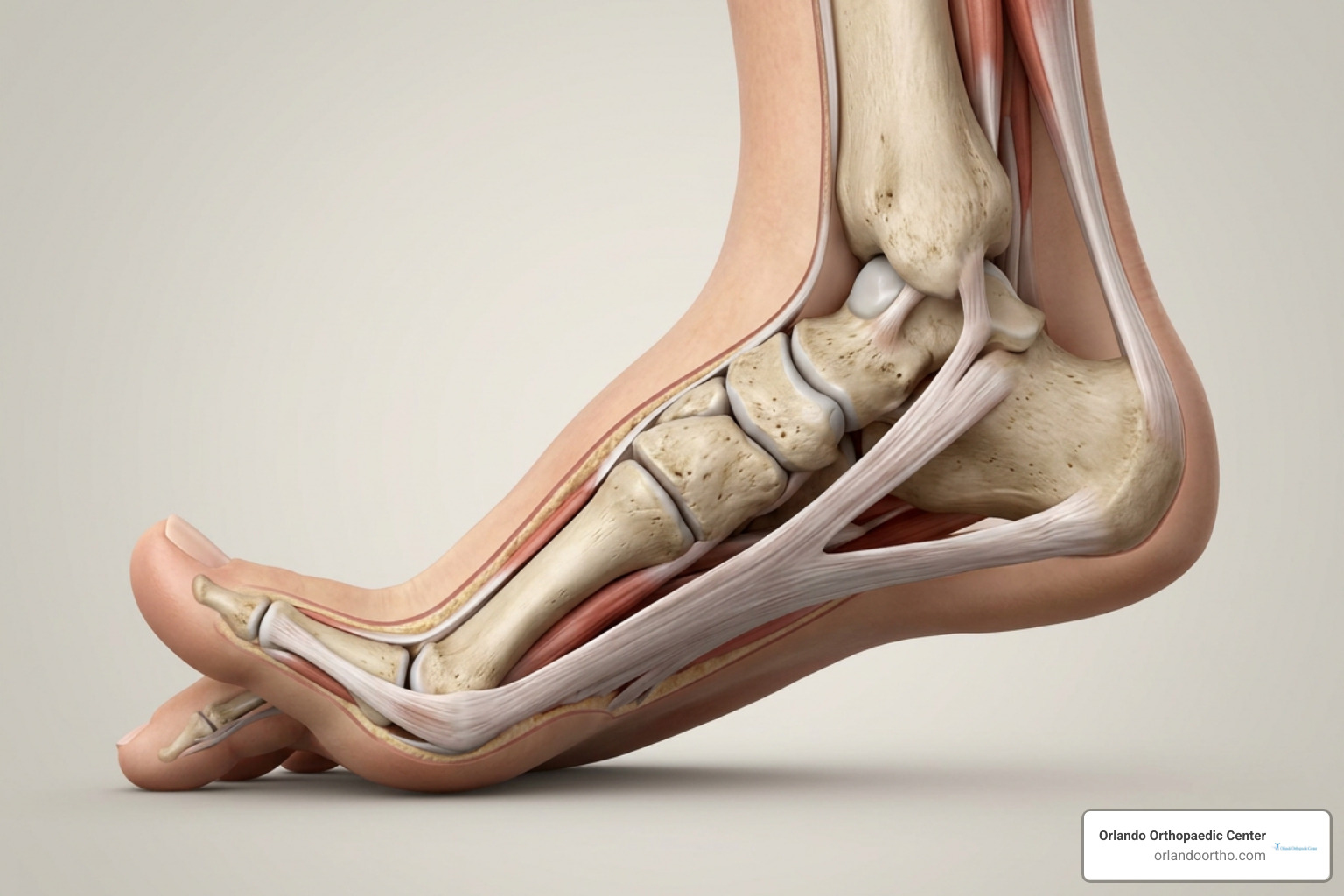
When you walk or push off your toes, your arch tightens and rises through a natural pulley action known as the windlass mechanism. When asking what causes pain in the heel of the foot, the answer is usually excessive strain on this system. When the demands of walking, running, or working on hard floors exceed what this tissue can tolerate, small micro-injuries occur. Over time, chronic irritation leads to degenerative changes where the tissue loses its organized, elastic structure rather than remaining simply inflamed.
The First-Step Pain Phenomenon and Tissue Degeneration
Many people describe morning heel pain as stepping directly onto a sharp pebble or a piece of glass. This happens because your foot rests in a relaxed, pointed-down position overnight.
While you sleep, the plantar fascia cools down and shortens in an attempt to knit small tears together. The moment you swing your legs out of bed and stand up, your body weight violently stretches this shortened, stiff tissue. That sudden mechanical load pulls hard on the heel bone, triggering an immediate flare of sharp pain. Once you walk around for a few minutes, the tissue warms up and the pain eases—only to return after you sit at a desk or in a car and try to stand again.
Why Stretching and Rest Alone Fall Short
When heel pain strikes, the natural reaction is to sit on the couch, stop exercising, and wait for the ache to disappear. While resting calms down severe irritation in the short term, complete rest actually lowers the tissue’s ability to handle physical stress. When you eventually return to normal walking or running, the underworked fascia is even less prepared for the impact, causing symptoms to return immediately.
Stretching the calf and arch provides welcome daily relief, but stretching alone does not rebuild the thickness and tensile strength needed to carry your body weight mile after mile. Without progressive loading, vulnerable tissue remains weak and at risk for complications like a partially torn plantar fascia.
The Best Way to Heal Plantar Fasciitis: Evidence-Based Active Rehabilitation
True recovery comes from active rehabilitation that systematically increases how much physical stress your arch can handle. Following proven clinical guidelines, like the APTA clinical practice guidelines, modern care combines targeted load training with hands-on therapy to restore pain-free movement.
A comprehensive treatment for plantar fasciitis addresses both the symptoms under your heel and the mechanical factors higher up the leg, including calf tightness and foot mechanics.
Why High-Load Strength Training Is the Best Way to Heal Plantar Fasciitis Long-Term
The cornerstone of long-term healing is progressive high-load strength training. Based on proven protocols for science-based runner rehab, slow, heavy loading encourages disorganized tissue fibers to remodel into strong, parallel alignment.
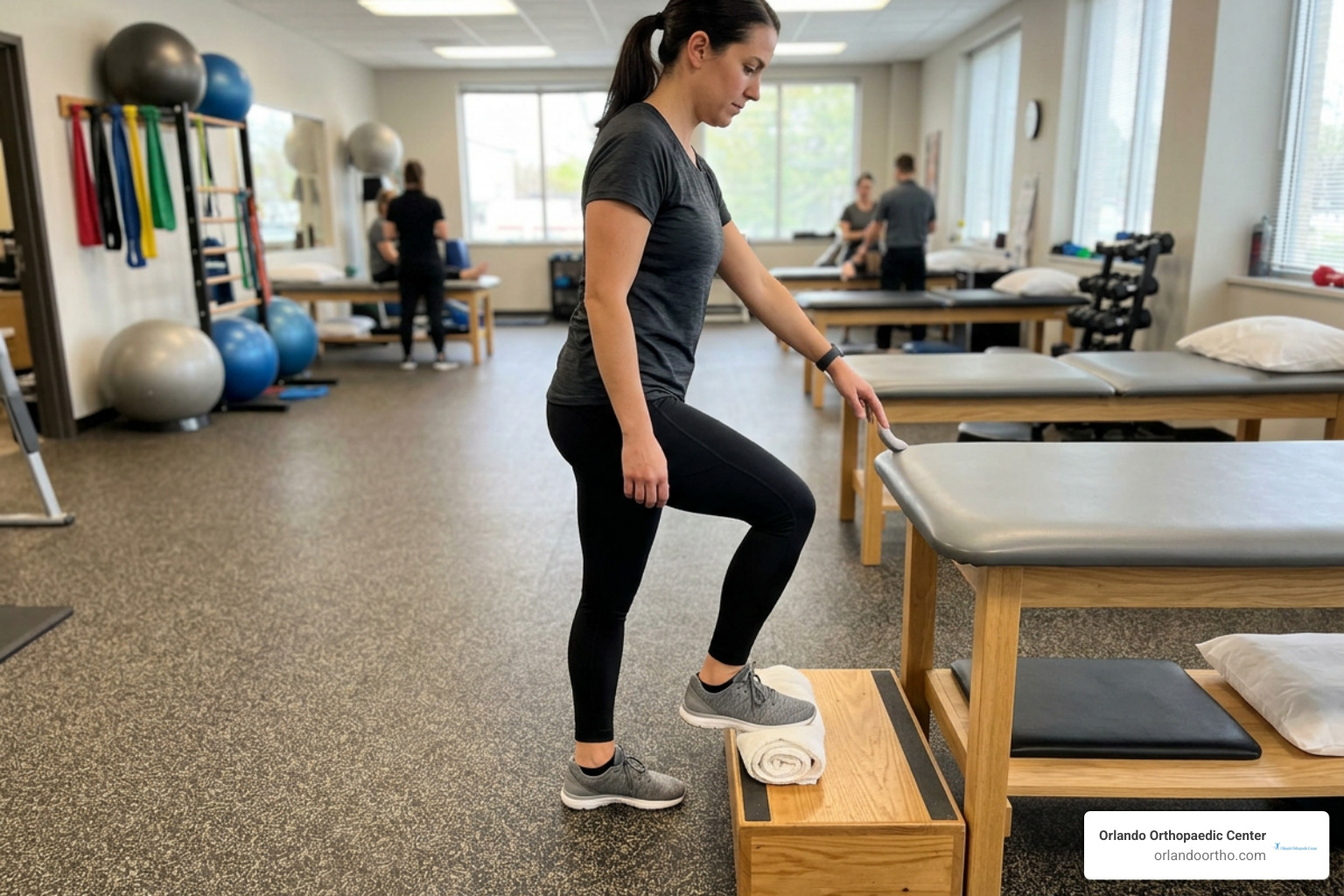
The most effective exercise is the modified single-leg heel raise:
- Stand barefoot on a step with a rolled towel placed under your toes. This towel bends your toes upward, engaging the windlass mechanism and tightening the fascia before you even move.
- Slowly push up onto the ball of your foot over a count of three seconds.
- Hold at the top for two seconds.
- Slowly lower your heel back down below the step over a count of three seconds.
- Perform three sets of 10 to 12 repetitions every other day, gradually adding weight with a backpack or dumbbell as your strength improves.
Targeted Stretching and Manual Therapy Techniques
While strengthening builds tissue capacity, targeted mobility work reduces excess pulling forces on your heel. Using the ultimate plantar fasciitis stretching routine for happy feet helps loosen tight connective bands before you take your first morning steps.
Complement this routine with daily Achilles stretching against a wall to lengthen the calf muscles. In our clinics, specialized manual therapy—including dry needling to release stubborn calf muscle knots and joint mobilizations to improve stiff ankle motion—helps accelerate tissue recovery and relieve persistent tension.
Supportive Modalities and Medical Interventions
Healing takes time, and temporary support tools can keep you comfortable and active while your strength improves.
| Treatment Level | Modalities & Tools | Primary Purpose | Best Used For |
|---|---|---|---|
| First-Line Conservative | High-load heel raises, calf stretches, supportive shoes | Rebuild tissue capacity and reduce strain | All initial and recurring cases |
| Supportive Comfort | Arch orthotics, rigid taping, night splints | Relieve tension and prevent morning stiffness | Acute flare-ups and early rehab |
| Advanced Clinical | Shockwave therapy, dry needling, PRP injections | Stimulate blood flow and natural tissue repair | Stubborn pain lasting over 3 months |
| Surgical Solutions | Gastrocnemius recession, plantar fascia release | Surgically relieve severe, unyielding tension | Severe, chronic pain failing conservative care |
Following Mayo Clinic plantar fasciitis diagnosis and care guidelines, our team uses a stepwise approach, ensuring you exhaust non-invasive, restorative therapies before considering advanced procedures.
Orthotics, Taping, and Night Splints
Supportive tools act as crutches for your arch while your foot rebuilds strength. Choosing which type of insole is right for you can distribute pressure evenly across your foot and reduce localized strain on the heel bone.
Antipronation taping offers quick, short-term relief during active days by physically preventing the arch from collapsing. For intense morning pain, wearing a night splint holds your foot at a neutral angle while you sleep, preventing the tissue from shortening overnight and easing those painful first morning steps.
When to Consider Advanced Medical Procedures
If severe heel pain persists despite several months of consistent strength training and stretching, advanced medical options may be appropriate:
- Extracorporeal Shockwave Therapy (EPAT): Delivers acoustic sound waves into the heel to stimulate localized blood flow and kickstart cellular repair.
- Platelet-Rich Plasma (PRP) Injections: Uses concentrated platelets from your own blood to promote natural tissue healing without weakening the structural integrity of the fascia.
- Gastrocnemius Recession: A minimally invasive procedure to lengthen tight calf muscles and permanently reduce pulling forces on the heel.
- Surgical Release: In rare, refractory cases, releasing a small portion of the tight band relieves chronic tension.
Returning to Exercise and Preventing Recurrence
You do not need to stay entirely sedentary while rehabilitating your heel. Learning how to step away from heel pain for good involves smart load management so you can stay active without flaring up your symptoms.
Selecting proper footwear is an essential first step; taking time to buy the right pair of running shoes provides the cushion and stability needed to protect your feet during recovery.
Is Resting the Best Way to Heal Plantar Fasciitis for Active Adults?
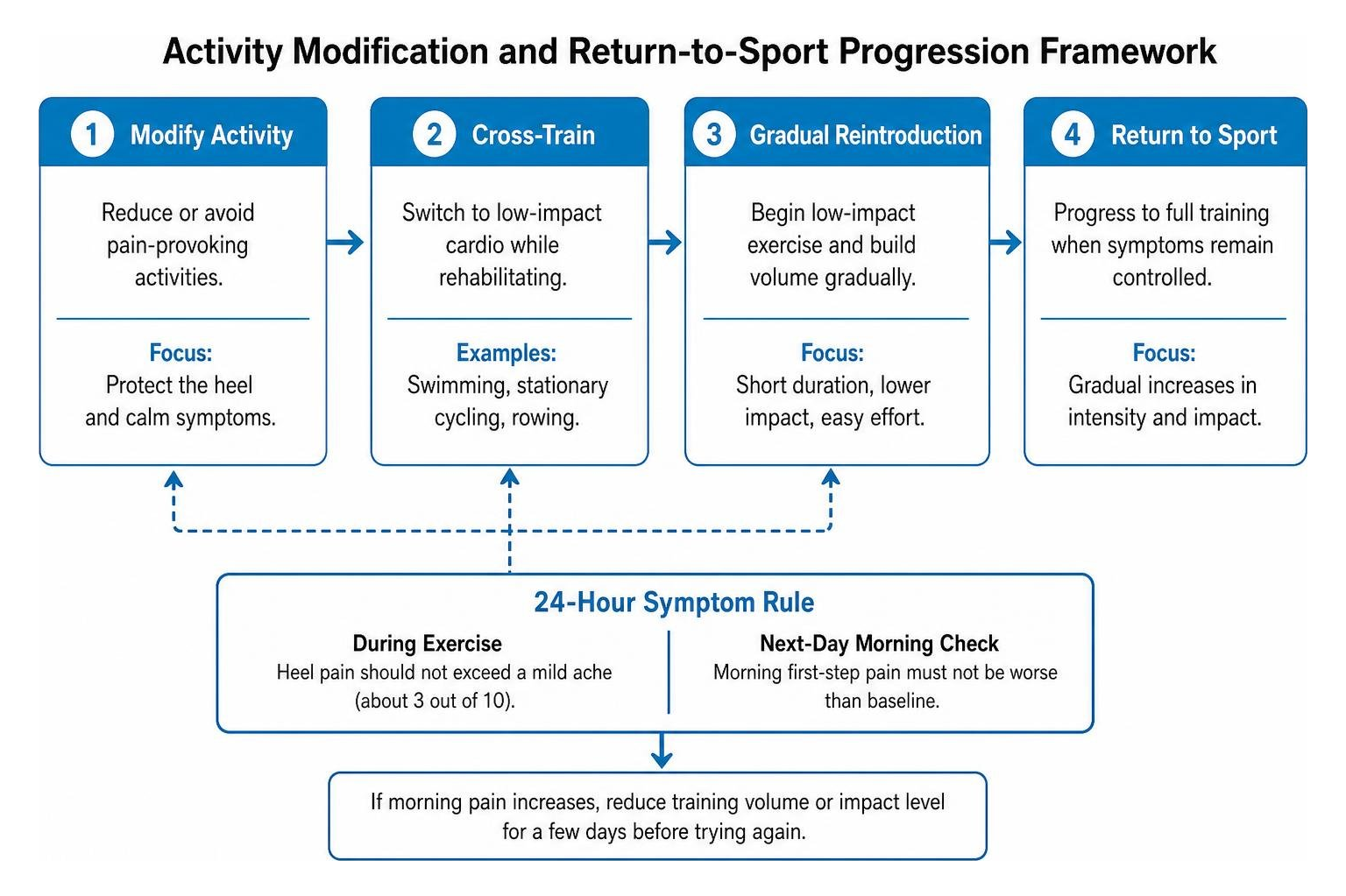
Complete rest is rarely the solution for active individuals. Instead of stopping all activity, switch to low-impact cardiovascular exercise like swimming, stationary cycling, or rowing while managing heel pain.
When managing diagnosing and treating common runner injuries, follow the 24-hour symptom rule: your heel pain during exercise should not exceed a mild ache (roughly 3 out of 10), and your morning first-step pain the next day must not be worse than baseline. If morning pain increases, reduce your training volume or impact level for a few days before trying again.
Long-Term Foot Health and Lifestyle Adjustments
To keep heel pain from returning, build these healthy habits into your daily routine:
- Avoid Barefoot Walking: Never walk barefoot on hard tile or hardwood floors, especially during the first hour after waking up. Keep supportive recovery sandals near your bed.
- Track Shoe Wear: Running shoes lose their structural support over time. Replace athletic footwear every 300 to 500 miles, or every six to nine months for everyday walking shoes.
- Progress Gradually: Follow the 10 percent rule—never increase your weekly walking distance, running mileage, or workout intensity by more than 10 percent per week.
- Maintain Calf Mobility: Continue performing calf and arch stretches several times a week, even after your heel feels completely normal.
Frequently Asked Questions About Healing Heel Pain
How long does it typically take to heal plantar fasciitis?
Most mild to moderate cases improve significantly within 6 to 12 weeks of consistent stretching, supportive shoe wear, and load management. When following a structured high-load strengthening program, chronic cases generally achieve substantial, lasting improvement over 3 to 6 months as the tissue remodels.
Can physical therapy and dry needling accelerate recovery?
Yes. Working with our services: physical therapy team provides personalized exercise progression and gait analysis. Targeted treatments like dry needling release stubborn muscle knots in the calf and foot, providing noticeable pain relief and functional improvements that help speed up your rehabilitation.
When should I see an orthopaedic specialist for heel pain?
You should schedule an evaluation with our subspecialties: foot & ankle specialists if your heel pain persists for more than two weeks, worsens despite rest and stretching, or causes you to limp. An orthopaedic examination and digital imaging can rule out other conditions such as stress fractures, nerve entrapment, or severe tears.
Conclusion
Overcoming heel pain does not require endless rest or quick fixes that only mask your symptoms. By pairing daily arch support and targeted mobility work with progressive high-load strengthening, you can rebuild tissue capacity and return to an active, pain-free life.
At Orlando Orthopaedic Center, our surgeons treat bones, joints, and soft tissue, helping Central Florida patients, parents, and athletes overcome complex musculoskeletal conditions. If persistent heel pain is slowing you down, schedule a specialized evaluation with the team at Orlando Orthopaedic Center’s foot and ankle practice to build your personalized recovery plan today.