The Ultimate Plantar Fasciitis Stretching Routine for Happy Feet
Start With a Gentle Plantar Fascia Stretching Exercise
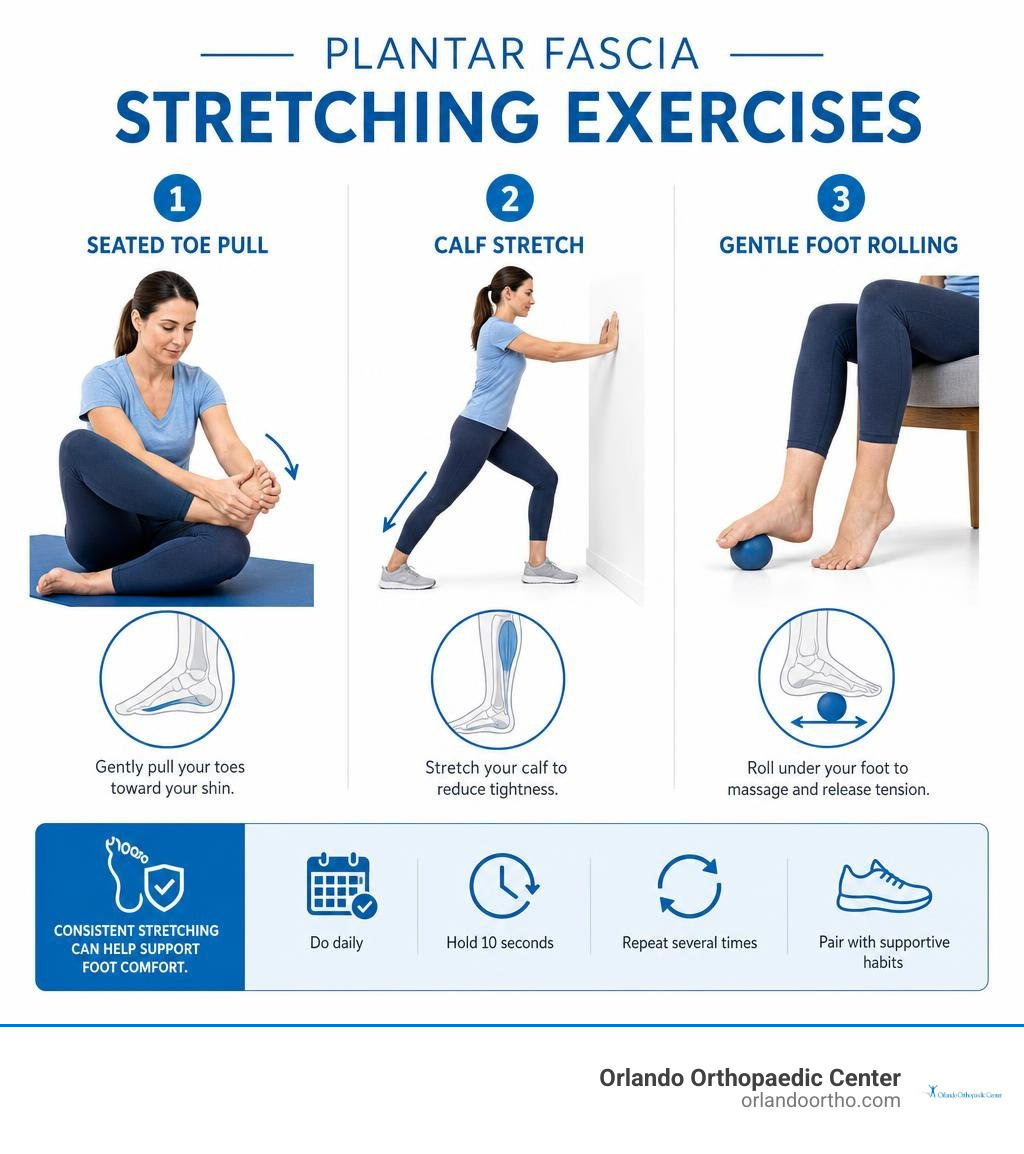
A plantar fascia stretching exercise can help ease the sharp heel pain and arch tightness that often hit with your first steps in the morning. Start seated: cross the sore foot over your opposite knee, gently pull your toes back toward your shin, and hold for about 10 seconds. Repeat several times before standing up and again after long periods of sitting.
The stretch should feel like a mild pull across the bottom of your foot, not sharp pain. Adding calf stretches can also help because tight calf muscles can increase strain on the tissue along the bottom of the foot.
For many people, consistent stretching is one part of recovery. Supportive shoes, reducing painful high-impact activity, and the right treatment plan can make it easier to return to walks, work, golf, running, and daily life.
If heel pain keeps you from walking normally or does not start improving with home care, Orlando Orthopaedic Center’s surgeons treat bones, joints, and soft tissue and can help identify the cause of ongoing foot pain.
Understanding What Causes Morning Heel Pain

That sharp, stabbing sensation on the bottom of your heel during your first steps out of bed is one of the most unmistakable signs of foot strain. The plantar fascia is a thick band of connective tissue running along the bottom of your foot, linking your heel bone directly to your toes and supporting your natural foot arch.
When this band experiences excessive stress, repetitive strain, or micro-tearing, it becomes irritated and tender. Knowing what causes pain in the heel of the foot can help you protect your feet from everyday flare-ups.
Common triggers include:
- Repetitive impact: Distance running, court sports, or jump training that repeatedly pounds the arches.
- Prolonged standing: Long work shifts on hard concrete or tile floors without adequate cushioning.
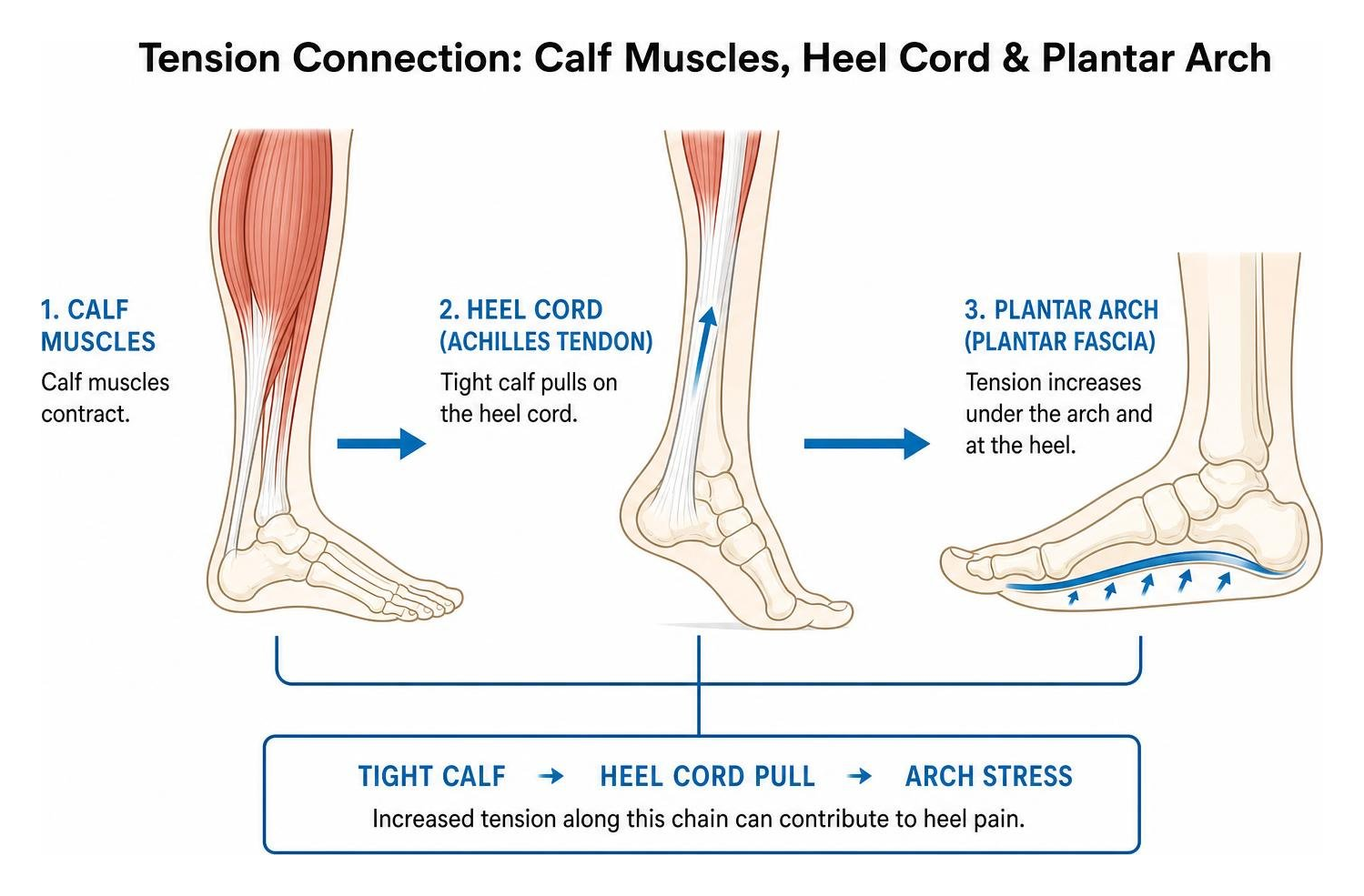
- Tight calf muscles: Tight lower leg muscles pull directly upward on the heel cord, increasing stress under the foot arch.
- Unsupportive footwear: Flat sandals, worn-out sneakers, or thin-soled dress shoes that lack structured arch support.
- Sudden routine changes: Ramping up workout mileage too quickly or transitioning rapidly to barefoot walking.
Understanding plantar fasciitis causes, symptoms, and treatment gives you the foundation needed to calm inflammation and protect your feet throughout the day.
How a Plantar Fascia Stretching Exercise Routine Relieves Heel Pain
When you sleep or sit for long periods, the band along the bottom of your foot naturally tightens and contracts into a shortened state. The moment you stand up, your body weight abruptly forces that cold, tightened tissue to stretch, causing that familiar morning heel stab.
Performing dedicated exercises to relieve foot pain gently warms and lengthens this tissue before you put full body weight on it. This proactive lengthening relieves the mechanical tugging at the heel bone.
Because the calf muscles connect down into the heel through the strong cord at the back of the ankle, keeping your lower legs loose is just as vital as stretching your sole. Incorporating daily Achilles stretching alongside foot stretches reduces tension across the entire back of your leg and underside of your foot.
Step-by-Step Guide to the Best Stretches for Foot Relief

A successful home stretching routine relies on good form, gentle consistency, and patience. Stretches should produce a mild, comfortable lengthening sensation. Never pull so hard that you create sharp pain.
Seated Plantar Fascia Stretching Exercise Technique
This seated stretch directly targets the connective tissue band supporting your arch. Learning PT-recommended stretching techniques ensures you isolate the arch properly without straining your toes.
- Get into position: Sit comfortably in a sturdy chair. Cross your sore leg over the opposite knee so your ankle rests flat on your thigh.
- Grasp your toes: With the hand on the same side as your painful foot, hold the base of your toes.
- Pull back gently: Pull your toes back toward your shin until you feel a firm stretch along the bottom of your foot.
- Check the tension: Use your opposite thumb to press into the center of your arch. The band should feel taut, similar to a plucked guitar string.
- Hold and repeat: Hold the stretch steadily for 10 to 15 seconds. Relax, and repeat 10 times. Aim for 2 to 3 sessions daily.
Standing Wall Stretches for Calves and the Achilles Tendon
Tight calf muscles pull directly on the heel bone, transferring excessive load to your arch. Managing calf tension is essential for diagnosing and treating common runner injuries and preventing recurring foot pain.
- Upper Calf (Gastrocnemius) Stretch: Stand facing a wall at arm’s length. Place your palms flat against the wall at shoulder height. Step your painful foot backward, keeping the back leg completely straight and the back heel flat on the floor. Bend your front knee and lean your chest toward the wall until you feel a deep stretch in the upper calf. Hold for 20 to 30 seconds, repeating 3 times.
- Lower Calf and Heel Cord (Soleus) Stretch: Maintain the same wall-facing position, but slide your back foot slightly forward. Bend both knees slightly while keeping your back heel firmly grounded. You will feel the stretch shift lower down toward the back of your ankle. Hold for 20 to 30 seconds, repeating 3 times.
Morning Plantar Fascia Stretching Exercise Routine Before Getting Out of Bed
Doing your stretches before your feet touch the floor is the best way to prevent that first-step morning pain.
- Bed-Edge Towel Pull: While sitting upright in bed with your legs straight out, loop a hand towel or yoga strap around the ball of your foot. Holding each end of the towel, gently pull your toes toward your chest while keeping your knee straight. Hold for 20 seconds; repeat 3 times.
- Ankle Circles and Alphabet: Lift your foot slightly and slowly draw the letters of the alphabet in the air with your big toe. This warms up the ankle joint and increases blood flow to the surrounding soft tissue.
- Bedside Seated Stretch: Swing your legs over the edge of the mattress. Perform 5 to 10 repetitions of the seated toe pull before standing up.
Arch Rolling and Ice Massage
Rolling the sole of your foot over a chilled object combines tissue mobilization with soothing cold therapy to calm irritation.
- Frozen Water Bottle Roll: Freeze a standard plastic bottle filled with water. While seated in a chair, place the bottle under the arch of your bare foot. Apply moderate downward pressure, rolling slowly from the heel to the ball of your foot for 3 to 5 minutes.
- Tennis or Massage Ball Roll: When away from home or at your desk, keep a tennis ball, lacrosse ball, or golf ball under your workspace. Roll gently across the arch for 2 minutes to keep the soft tissue flexible during the workday.
Complete Recovery Tips Beyond Daily Stretching
While stretching is a core part of feeling better, long-term relief requires a complete approach that addresses footwear, daily movement, and tissue rest.
- Upgrade Your Footwear: Avoid walking barefoot, even at home on hardwood or tile floors. Wear supportive indoor shoes or recovery slides with contoured arches.
- Choose the Right Shoe Inserts: Over-the-counter or custom inserts support fallen arches and cushion the heel. Reviewing which type of insole is right for you helps you select the right balance of arch contour and heel cup cushioning.
- Switch to Low-Impact Activities: Swap running and high-impact aerobics for swimming, stationary cycling, or water walking while your foot recovers.
- Protect Damaged Tissue: If you experience sudden, severe arch pain or popping, you may have a partially torn plantar fascia, which requires immediate evaluation and active rest.
- Explore Conservative Therapies: A comprehensive treatment for plantar fasciitis may include night splints to keep your foot gently stretched while sleeping, tailored physical therapy, or targeted anti-inflammatory measures.
Frequently Asked Questions About Plantar Fasciitis Stretches
How long does it take for stretching to relieve plantar fasciitis pain?
Most individuals begin noticing less morning stiffness within 2 to 4 weeks of consistent daily stretching. However, because connective tissues have limited blood flow, full recovery often takes several months. Sticking to your daily stretching routine even after pain starts to fade is crucial for avoiding recurring symptoms.
Can stretching alone cure plantar fasciitis?
Stretching is one of the most effective tools available, but it works best when paired with supportive footwear, activity changes, and proper arch support. If you continue walking barefoot on hard floors or wearing worn-out shoes, stretching alone may not provide complete, lasting relief.
When should you see a specialist for ongoing heel pain?
You should schedule an appointment with an orthopaedic foot and ankle specialist if:
- Your heel pain does not improve after 2 to 4 weeks of regular home stretching and rest.
- You have constant pain that makes it difficult to walk or bear weight.
- You experience numbness, tingling, or severe swelling around your heel.
- You suspect additional issues, such as underlying bone stress or foot spurs, which can occur alongside ongoing arch tension.
Finding Lasting Relief for Your Feet in Central Florida
You do not have to let heel pain disrupt your active lifestyle, workdays, or weekend sports. If home stretching routines and supportive shoes are not bringing you the relief you need, our experienced team is here to help you get back on your feet comfortably.
Orlando Orthopaedic Center’s surgeons treat bones, joints, and soft tissue, offering comprehensive care for patients across Central Florida. Whether you need an accurate evaluation, specialized physical therapy, custom bracing, or advanced care options, we build a personalized recovery plan tailored to your lifestyle.
Schedule a consultation for specialized plantar fasciitis care in Orlando today to take your first pain-free step forward.