Finding Expert Central Florida Orthopaedics to Stay Active and Pain-Free
Finding Orthopaedic Care in Central Florida
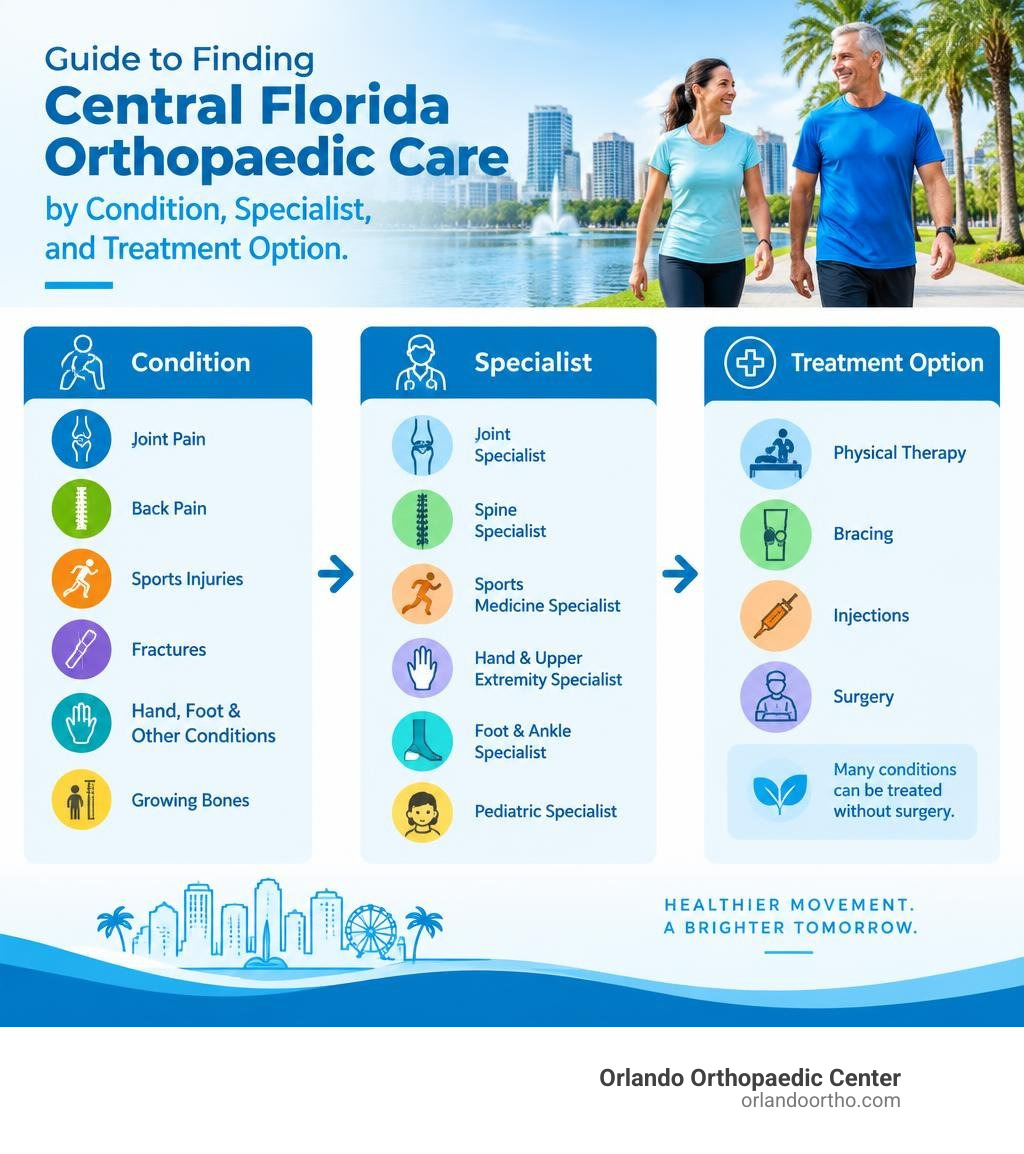
For joint or back pain that will not go away, or an injury that limits your movement, start with an orthopaedic specialist who treats the affected area. Ask about your options, which may include physical therapy, bracing, injections, or surgery. Many conditions can be treated without surgery.
Orthopaedic care covers more than joints. Specialists also treat sports injuries, fractures, and problems affecting the spine, hands, feet, and growing bones. Orlando Orthopaedic Center’s locations can help you find care in the Orlando area. The American Board of Orthopaedic Surgery explains that orthopaedics focuses on preventing, diagnosing, and treating musculoskeletal conditions.
Understanding Central Florida Orthopaedics and Musculoskeletal Health
The musculoskeletal system is your body’s internal framework. It includes your bones, joints, ligaments (the bands of tissue connecting bone to bone), tendons (which connect muscle to bone), and muscles. When everything works in harmony, you can walk around Lake Eola, play a round of golf, or pick up your grandchildren without a second thought. However, when an injury strikes or wear and tear sets in, even getting out of bed can feel like a chore.
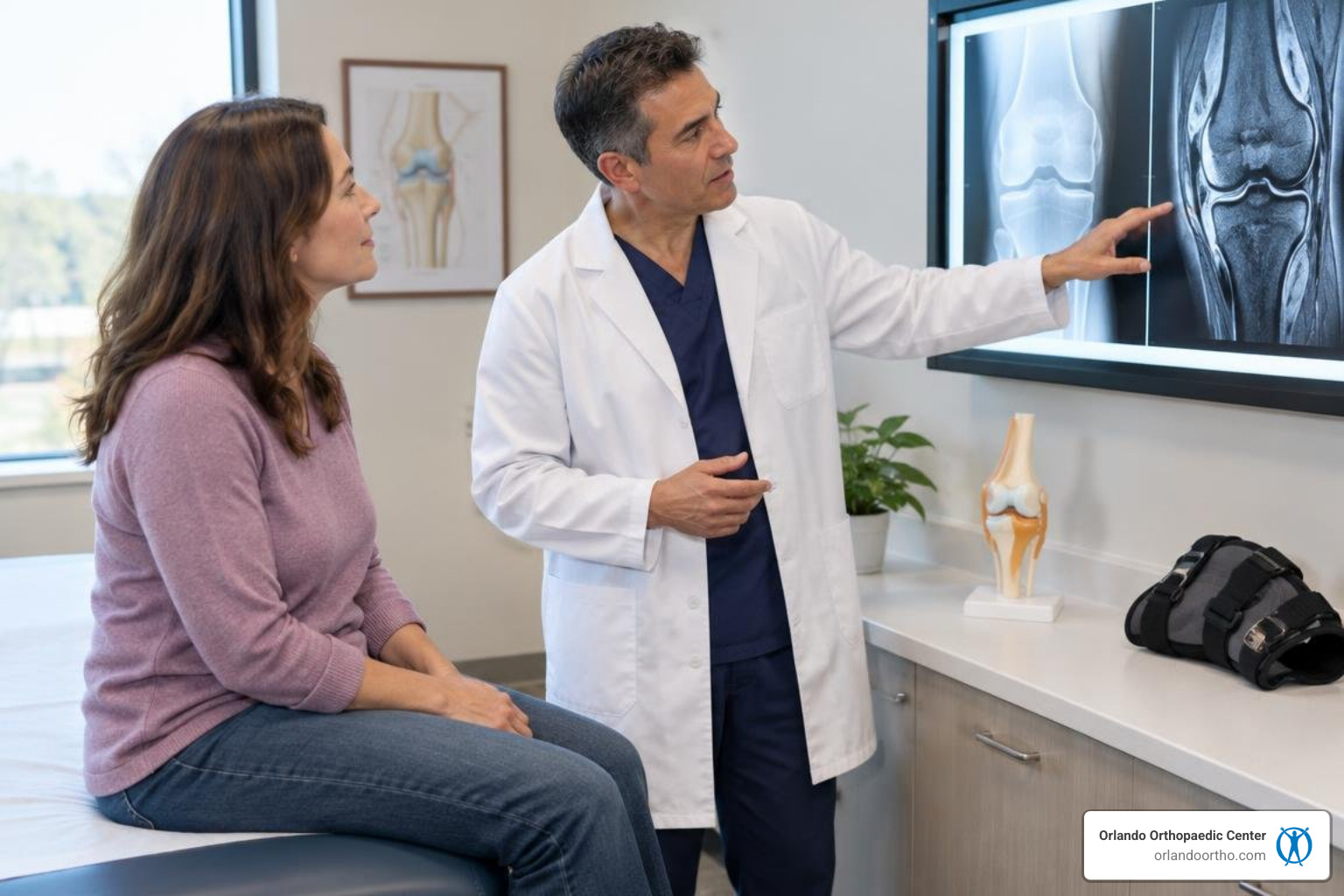
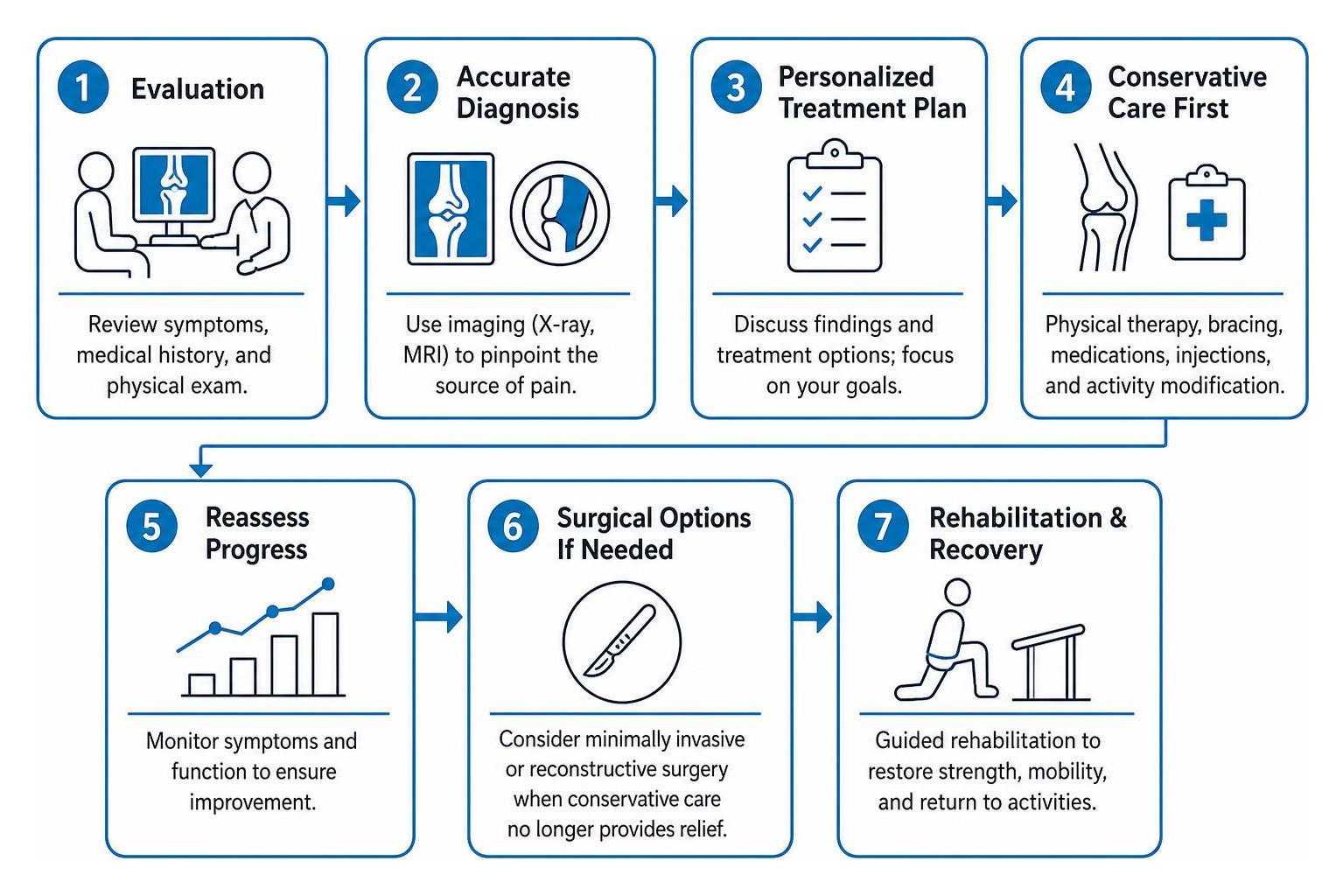
Our primary goal in orthopaedics is anatomical preservation—protecting your natural joints and tissues whenever possible. Modern orthopaedic care relies on clear diagnostic imaging, such as digital X-rays and MRI scans, to pinpoint the exact source of your pain. Once we know what is going on, we focus first on non-operative therapies, reserving surgical intervention for when conservative options no longer provide relief.
Because the human body is intricate, the field is organized into diverse orthopaedic subspecialties. This structure ensures you receive care from an expert who focuses on your specific joint or condition every single day.
| Treatment Approach | Common Therapies | Best Suited For |
|---|---|---|
| Conservative Management | Physical therapy, custom bracing, anti-inflammatory medications, targeted joint injections | Early-stage arthritis, mild tendon irritation, simple sprains, minor muscle strains |
| Surgical Intervention | Arthroscopy (minimally invasive keyhole surgery), joint replacement, fracture realignment, tendon repair | Advanced joint wear, complete ligament tears, complex bone breaks, structural deformities |
Pediatric Orthopaedics and Growth Disorders
Children are not just miniature adults. Their bones are still developing, containing specialized areas of cartilage called growth plates. If a growing child sustains an injury or has a developmental disorder, it requires careful handling so their skeletal alignment develops correctly.
Pediatric orthopaedic specialists manage everything from congenital deformities (conditions present at birth, such as clubfoot or limb length differences) to sudden playground fractures. Growth plate injuries demand prompt evaluation because damage to these zones can affect how a bone grows over time. Pediatric experts also treat scoliosis (an abnormal side-to-side curvature of the spine) using gentle monitoring, custom braces, or corrective surgery when necessary, helping young athletes and active kids get back to school and play.
Musculoskeletal Oncology and Bone Tumors
Discovering a lump, unusual swelling, or persistent bone pain can be frightening. Musculoskeletal oncology is the dedicated subspecialty focused on diagnosing and treating bone neoplasms (abnormal growths in bone tissue) and soft-tissue tumors that form in muscles, fat, or nerves.
Fortunately, many growths are completely benign (non-cancerous), such as simple bone cysts. When malignant tumors do occur, our specialists collaborate with medical oncologists and radiation experts to deliver comprehensive, compassionate care. Using advanced limb-salvage surgery, surgeons can remove tumors while preserving the surrounding bone and muscle function, protecting your mobility and independence.
Key Subspecialties in Modern Orthopaedic Care
When you need focused care, visiting a dedicated subspecialist ensures your treatment matches your lifestyle and goals. Through advanced clinical services, modern orthopaedic practices provide personalized treatment plans backed by thorough diagnostics.
How Central Florida Orthopaedics Treats Sports and Spine Injuries
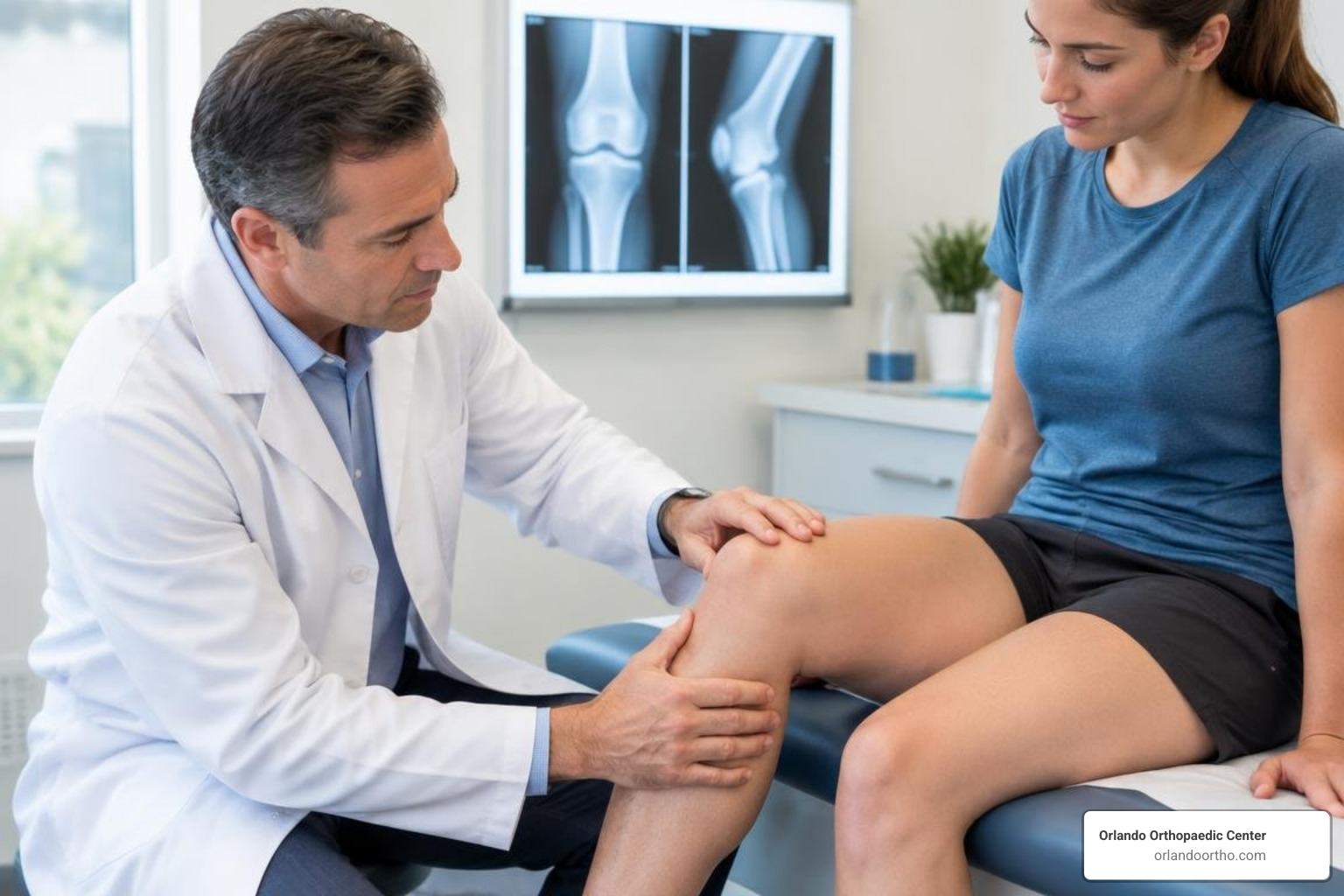
Whether you are training for a half-marathon or simply dealing with nagging lower back stiffness after yard work, sports medicine and spine care address two of the most common sources of physical limitation.
Sports medicine focuses on restoring athletic performance and joint stability. Common problems include:
- Ligament tears: Such as an ACL tear in the knee, causing instability and swelling.
- Rotator cuff injuries: Tears or inflammation in the shoulder tendons that make lifting your arm overhead painful.
- Meniscus and labrum tears: Cartilage damage that can cause catching, clicking, or deep joint aching.
Spine care tackles back and neck conditions that interfere with everyday movement. When a herniated disc (a bulging cushion between your spinal bones) presses against a nerve, it can send sharp shooting pain down your leg or arm. Spine specialists treat spinal deformities, chronic neck pain, and nerve compression using targeted physical therapy, spinal injections, and minimally invasive spine surgery. These tiny-incision procedures relieve nerve pressure and stabilize the spine with minimal disruption to nearby muscles.
Navigating Central Florida Orthopaedics for Foot, Ankle, and Joint Care
Joint wear and lower-extremity pain can stop you in your tracks. When everyday tasks like climbing stairs become difficult, adult reconstructive surgery and total joint arthroplasty (total joint replacement) can replace worn-out cartilage in the hip or knee with durable artificial components, giving you back a smooth, pain-free stride.
In the foot and ankle, orthopaedic specialists treat bone, joint, tendon, and ligament conditions:
- Ankle instability and severe sprains: Chronic rolling of the ankle caused by stretched or torn ligaments.
- Achilles tendon injuries: Pain, swelling, or complete tears in the large tendon connecting your calf to your heel.
- Structural corrections: Surgical realignment for severe bunions and flatfoot reconstruction to rebuild collapsed arches and relieve strain.
For upper extremity issues, hand and wrist surgery addresses nerve compressions such as carpal tunnel release, tendon repairs, and finger joint arthritis. Meanwhile, shoulder and elbow specialists perform joint resurfacing and reconstruction to restore overhead reaching and lifting power.
Orthopaedic Trauma, Fracture Management, and Rehabilitation
Accidents happen without warning. Orthopaedic trauma surgeons specialize in managing complex trauma, severe bone breaks, and joint dislocations from car accidents, sports collisions, or severe falls. Treatment often involves fracture reduction—aligning broken bone fragments using internal plates, rods, or screws so the bone heals in its proper position.
Healing does not end when the bone knits back together. Post-surgical rehabilitation and physical therapy rebuild muscle strength, improve joint flexibility, and retrain your balance. You can explore helpful patient resources to guide your recovery milestones and home exercises.
Choosing Board-Certified Specialists and Accessing Care
When choosing a specialist, credentials matter. Board certification means a surgeon has completed years of rigorous residency training, passed thorough clinical examinations, and met the high standards of an official medical specialty board. Many of our surgeons also complete fellowship training, spending an extra year mastering a single area like the spine, hand, or sports medicine.
Our team of board-certified physicians works alongside physical therapists and imaging technicians to provide seamless, coordinated care across Central Florida.
If you experience an acute injury, we offer four convenient Orthopaedic Injury Walk-In Clinics across the region:
- Casselberry, FL: 2911 Red Bug Lake Road
- Downtown Orlando, FL: 25 W Crystal Lake Street, #200
- Waterford Lakes (Orlando, FL): 464 N Alafaya Trail, #108
- Winter Garden, FL: 13838 Tilden Road
For scheduled appointments, consultations, and ongoing care, we also welcome patients at our other medical offices in Lake Mary, Lake Nona, Oviedo and Winter Park, FL.
Frequently Asked Questions About Orthopaedic Care
What conditions do orthopaedic specialists treat most frequently?
Orthopaedic doctors routinely treat osteoarthritis (wear-and-tear joint cartilage breakdown), bone fractures, tendonitis (tendon inflammation), ligament sprains, rotator cuff tears, herniated discs, and acute sports injuries.
How do I know if I need surgery or conservative treatment?
Most musculoskeletal conditions start with conservative therapies. If your pain improves with physical therapy, bracing, activity modifications, or targeted joint injections, surgery is usually unnecessary. However, if structural damage is severe, your joint remains unstable, or pain interferes with basic daily activities despite non-surgical care, your surgeon will discuss surgical options.
Why is board certification important when choosing an orthopaedic doctor?
Board certification confirms that your doctor has completed accredited training, passed comprehensive specialty exams, and stays current with ongoing medical advancements. It is an objective measure of clinical skill, ethical practice, and a commitment to patient safety.
Conclusion
Living with joint stiffness, back pain, or an unexpected fracture can put your life on hold, but you do not have to accept chronic discomfort as your baseline. From early conservative care and physical therapy to specialized reconstruction, modern orthopaedic medicine is designed to protect your joints and keep you moving comfortably.
Read through our patient success stories to see how neighbors across our community have regained their active lifestyles. If you are dealing with persistent pain or a sudden injury, visit our foot and ankle subspecialty team or stop by one of our walk-in clinics to take your first step toward recovery today.