Healing Turf Toe with Ultrasound Therapy: A Comprehensive Guide
Turf Toe Ultrasound Therapy Can Support a Safer Return to Activity
Turf toe ultrasound therapy may help calm pain and support healing after a big toe sprain, but it works best as one part of a full recovery plan. After an orthopaedic evaluation confirms the joint is stable, treatment may include protecting the toe, using a stiff-soled shoe or insert, taping, guided physical therapy, and gradual strengthening. Ultrasound is a painless treatment that uses sound waves to target irritated soft tissue around the base of the big toe.
If you have swelling, pain when pushing off, trouble walking, or cannot return to golf, running, work, or exercise, do not try to push through it. A more serious turf toe injury can involve torn support tissue beneath the big toe joint and may need immobilisation or further imaging.
At Orlando Orthopaedic Center, our surgeons treat bones, joints, and soft tissue. Early care can help protect the joint, restore motion, and reduce the risk of long-term stiffness or weakness.
Understanding Big Toe Sprains and Joint Damage
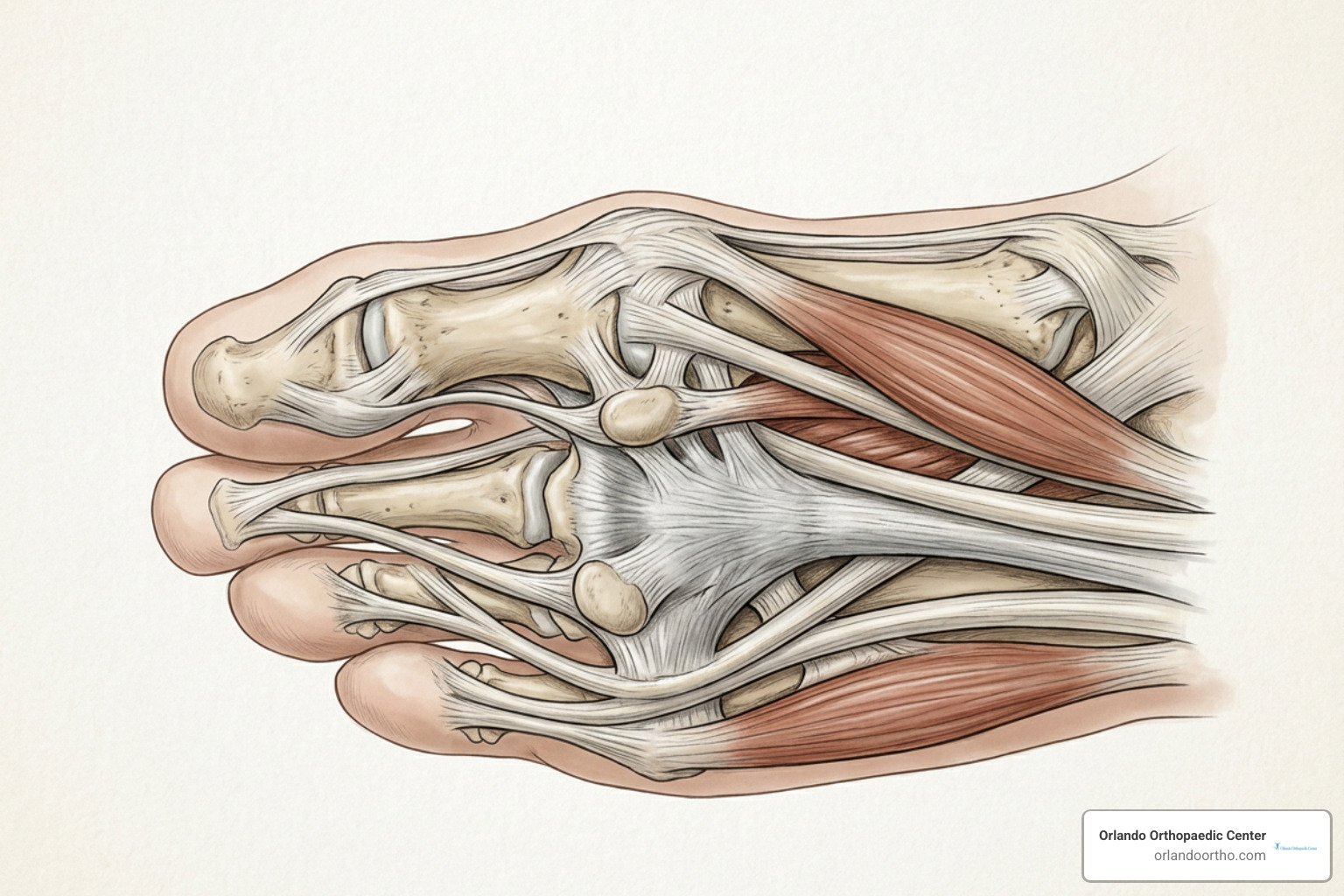
Turf toe happens when your big toe is forcefully bent upwards past its normal limit—a motion known as hyperextension, or bending too far backward toward the top of the foot. This movement commonly happens when an athlete plants the front of their foot firmly on artificial turf or grass while an opponent lands on the back of their heel, bending the big toe upward under heavy body weight.
Beneath the main joint at the base of your big toe lies a strong network of fibrous connective tissues, tiny round bones that act like pulleys, and tough joint capsules that absorb immense forces every time you take a step, jog, jump, or balance. When hyperextended, these supporting structures stretch or tear.
Common symptoms include:
- A sudden pop or sharp twinge at the base of the toe
- Swelling and bruising across the ball of the foot
- Significant push-off pain whenever you try to walk normally
- Joint stiffness that makes bending the toe upward nearly impossible
Much like common ankle sprains that stretch the side ligaments of the ankle joint, an injured toe requires prompt, expert attention. Left untreated, a severe sprain can lead to chronic joint stiffness, lasting weakness, and persistent discomfort during everyday activities. Our team provides specialized subspecialties in foot and ankle care to protect vulnerable tissues, restore joint mechanics, and help Central Florida athletes get back on their feet safely.
How Dynamic Ultrasound Imaging Spots Hidden Toe Damage
Properly evaluating an injured big toe requires more than just a routine physical exam. While standard resting X-rays help rule out broken bones, they can easily miss soft tissue tears and joint instability because they only capture a static picture while your foot stays still.
This is where dynamic musculoskeletal ultrasound imaging excels. During an evaluation, a specialist uses high-frequency sound waves to view the soft tissues, ligaments, and small bones under the big toe in real time while gently moving the joint.
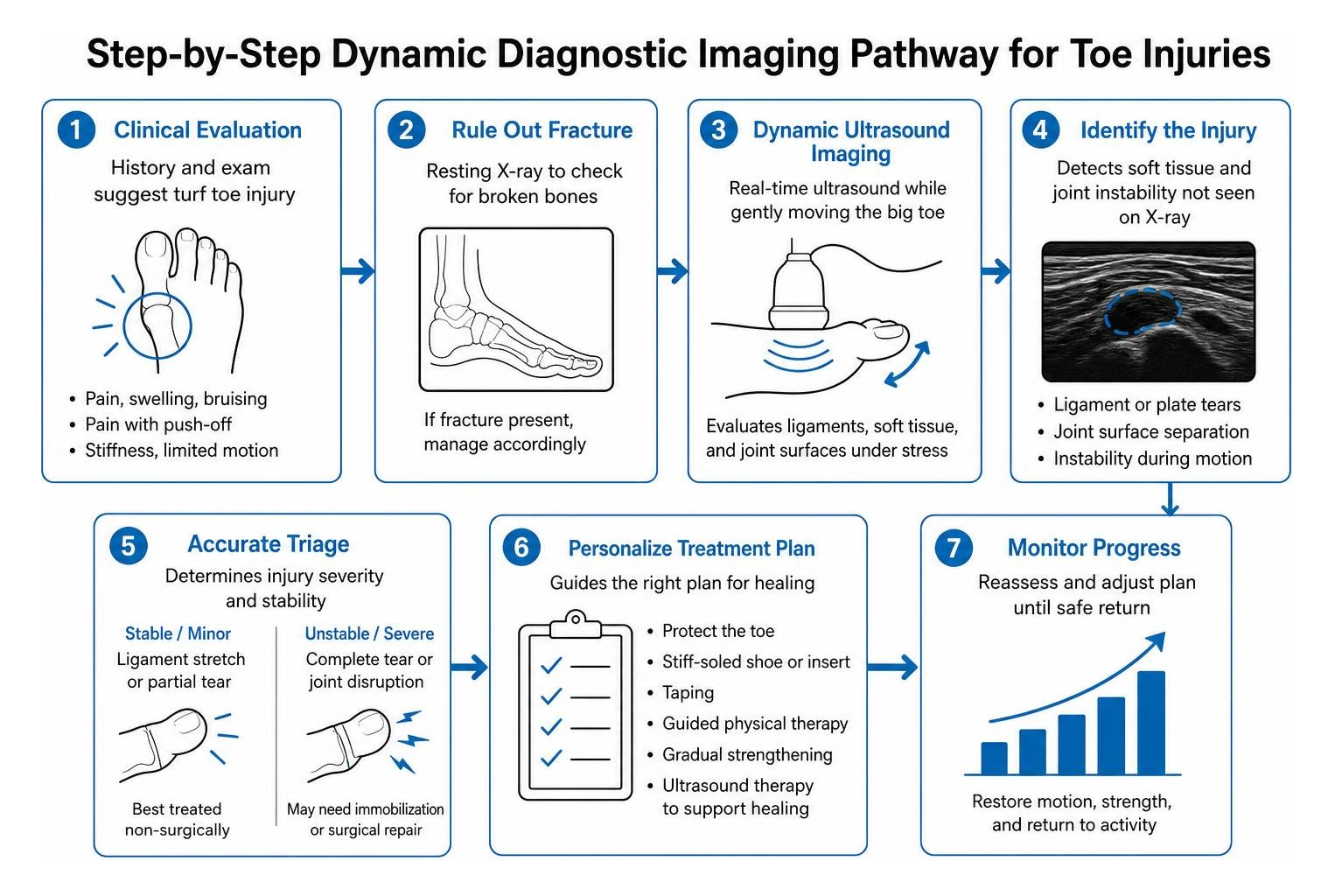
Key benefits of dynamic movement imaging include:
- Real-time movement evaluation: Viewing the tissue under stress reveals if the joint surfaces separate unnaturally during toe bending.
- Spotting hidden tears: Ultrasound accurately detects tears in the thick supportive plate beneath the joint, helping identify why push-off motions cause persistent pain.
- Accurate triage: It clearly differentiates minor ligament stretches that heal well with non-surgical physical therapy from complete joint disruptions that require surgical repair.
Using dynamic imaging ensures an accurate diagnosis from day one, preventing misdiagnosis and forming the foundation of a personalized recovery plan tailored to your lifestyle.
How Turf Toe Ultrasound Therapy Accelerates Healing
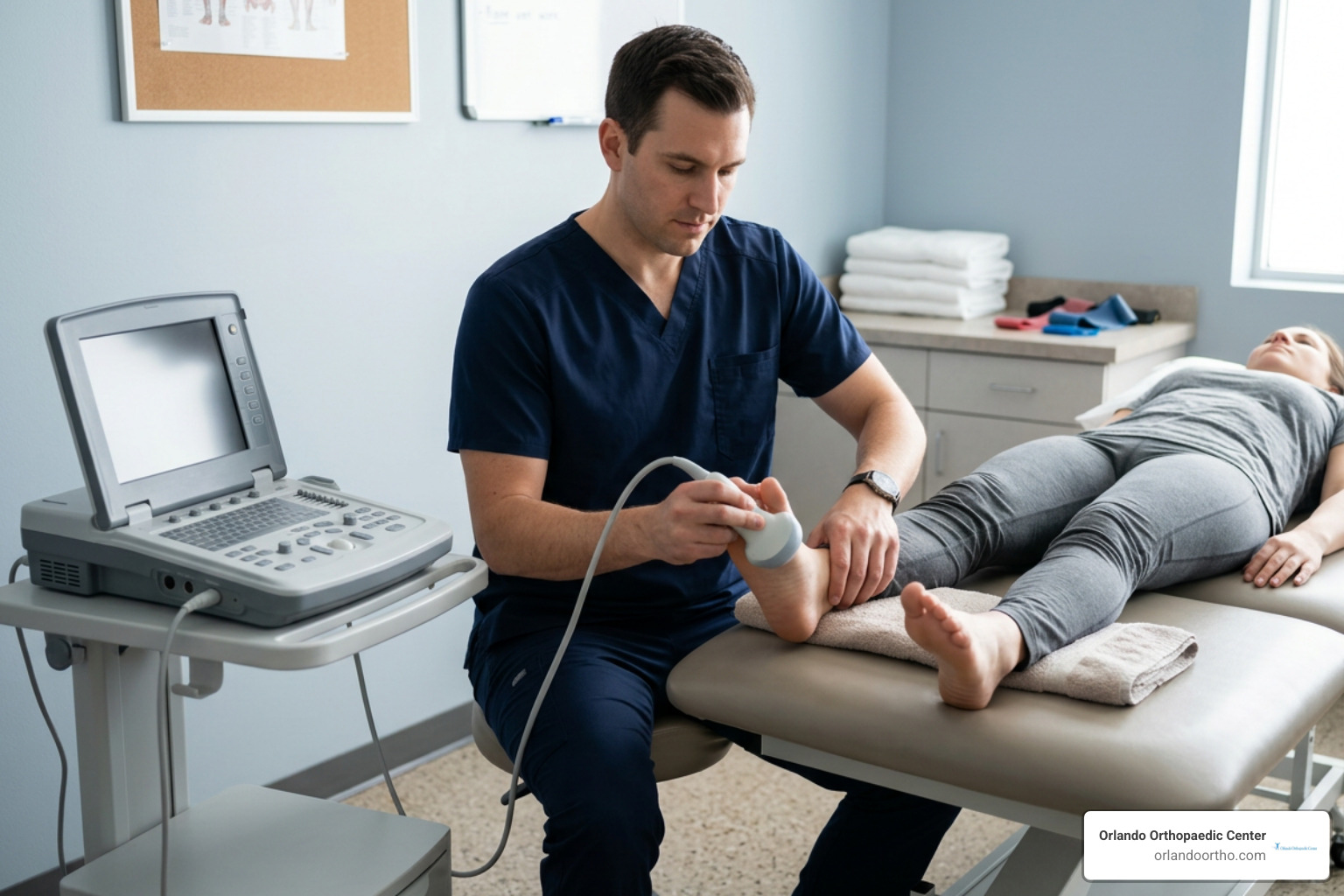
Therapeutic ultrasound is a non-invasive physical therapy treatment that delivers gentle, high-frequency sound waves deep into injured tissues beneath the skin. Unlike diagnostic imaging used to take pictures, therapeutic ultrasound transfers soothing mechanical and acoustic energy directly into damaged soft tissues around the big toe joint.
This targeted energy works through several natural mechanisms:
- Enhancing blood flow: The acoustic vibrations generate gentle deep warmth, expanding microscopic blood vessels to deliver oxygen and essential nutrients to healing tissues.
- Stimulating cellular activity: The microscopic sound pulses stimulate cells responsible for producing collagen, the main building block of strong ligaments and joint capsules.
- Relieving localized pain: Gentle stimulation calms irritated nerves to decrease tenderness and joint stiffness, helping you put weight on your foot more comfortably when walking.
Starting Turf Toe Ultrasound Therapy During Early Recovery
Timing is essential when using therapeutic ultrasound. During the first few days following an acute injury, the toe requires rest, ice, compression, and elevation to control initial swelling and protect delicate tissues.
Once the initial sharp pain settles, non-thermal pulsed ultrasound can be introduced. Pulsed mode delivers brief sound wave pulses without generating deep heat, allowing cell stimulation and fluid drainage without aggravating fresh swelling. As healing progresses, continuous thermal ultrasound can be used to relax stiff joint tissues and improve flexibility before exercise.
What to Expect During a Turf Toe Ultrasound Therapy Session
A therapeutic ultrasound treatment is quick, comfortable, and relaxing:
- You sit or recline comfortably with your foot supported.
- The physical therapist applies a warm, water-soluble conductive gel to the ball of your foot and around the big toe joint.
- A small metal soundhead applicator is gently moved in slow, circular patterns over the injured area for roughly five to ten minutes.
- You will feel no sharp pain—only light touch from the applicator and a mild, soothing warmth.
- Immediately after sound wave application, your therapist may guide you through gentle joint movements and toe stretches to maximize flexibility while the tissue is relaxed.
Building a Complete Non-Surgical Recovery Plan
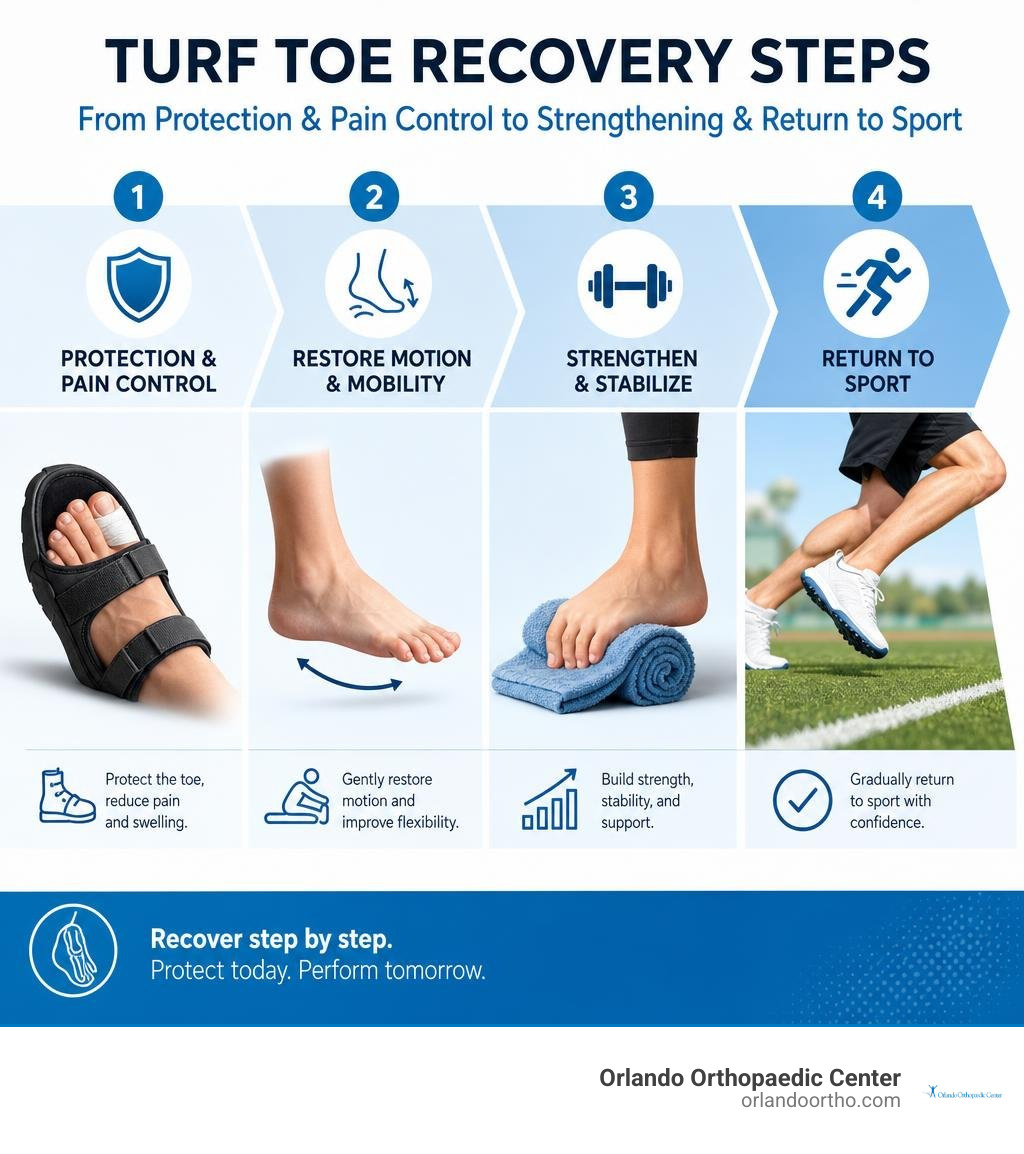
Therapeutic ultrasound is most effective when integrated into a structured, step-by-step rehabilitation program. Healing a sprained big toe joint requires protecting recovering ligaments while gradually rebuilding joint range of motion, muscle strength, and athletic balance.
Our dedicated physical therapy services guide patients through every phase of recovery:
| Recovery Phase | Primary Goals | Key Interventions & Tools |
|---|---|---|
| Phase 1: Protection & Calm | Reduce swelling, relieve acute pain, protect healing tissues | Walking boot or stiff-soled shoe, supportive taping, pulsed ultrasound, gentle ice therapy |
| Phase 2: Motion & Activation | Restore pain-free bending, wake up small foot muscles | Continuous ultrasound, warm-water toe flexes, towel scrunches, marble pick-ups, arch-dome exercises |
| Phase 3: Strength & Push-Off | Rebuild push-off power, restore athletic single-leg balance | Resistance band toe flexions, calf raises, balance foam pads, short-foot stability drills |
| Phase 4: Return to Sport | Sport-specific agility, explosive jumping, sprinting | Carbon fiber shoe inserts, custom taping, turf cutting drills, progressive running programs |
Using supportive taping techniques helps hold the big toe in a slightly downward-pointed position, preventing accidental hyperextension during daily walking. Pairing this with a stiff-soled shoe or a rigid carbon fiber orthotic insert minimizes upward bending stresses across the ball of the foot, giving injured ligaments the protected environment they need to rebuild tensile strength.
Frequently Asked Questions About Turf Toe Recovery
Does therapeutic ultrasound hurt when applied to an injured big toe?
No, therapeutic ultrasound is completely painless. Most patients experience only the light pressure of the smooth applicator gliding over the skin and a pleasant, gentle warmth. If you ever feel any sharp sensation or discomfort, your physical therapist will adjust the settings or applicator speed immediately.
How many therapy sessions will I need before returning to sports?
The overall length of physical therapy depends on the extent of your initial sprain. Most individuals notice meaningful reductions in pain and stiffness within three to six sessions. Complete rehabilitation generally ranges from a few weeks for minor sprains to several months for more significant soft tissue tears, ensuring full, painless push-off strength before clearance for competitive sports.
When is surgery needed instead of physical therapy?
While the vast majority of big toe sprains heal successfully without surgery, surgical repair may be necessary if dynamic imaging reveals complete ligament disruption, gross joint instability, loose bone fragments, or persistent weakness that prevents normal running and jumping. In these cases, consulting our specialized sports medicine care team ensures you receive an expert evaluation to determine the most effective path forward.
Conclusion
Overcoming a painful big toe sprain requires patience, the right protective equipment, and targeted treatments that stimulate tissue recovery. By incorporating therapeutic ultrasound into an active, guided physical therapy regimen, athletes and active individuals across Central Florida can relieve joint irritation, restore flexibility, and regain dependable push-off strength.
At Orlando Orthopaedic Center, our surgeons treat bones, joints, and soft tissue. If big toe pain is holding you back from the sports, workouts, or daily activities you love, learn more about turf toe causes and care and connect with our team today to get your recovery on track.