Understanding Anterior Pelvic Tilt: Symptoms, Causes, and Fixes
Anterior Pelvic Tilt: When a Forward-Tipped Pelvis Needs Attention
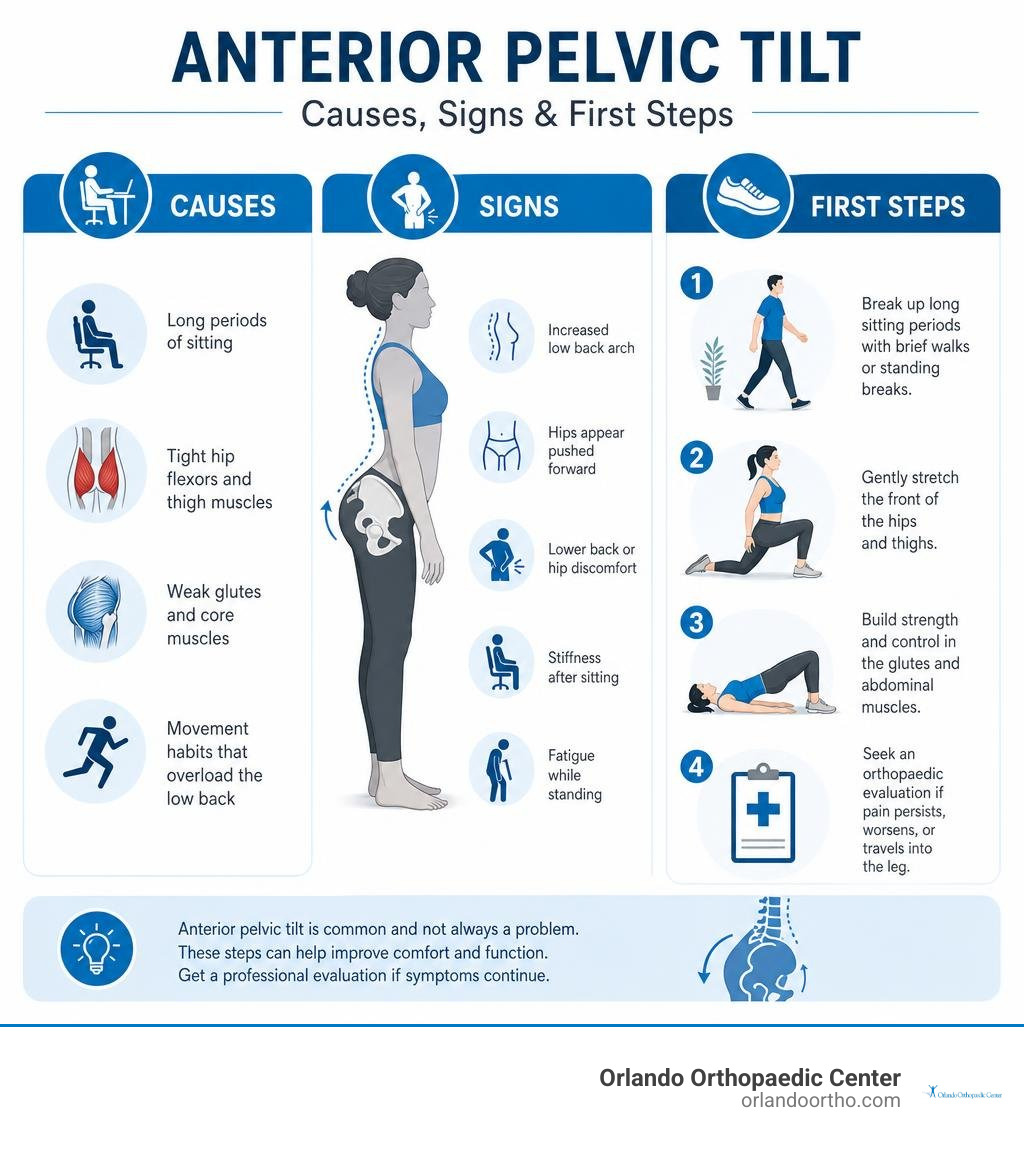
Anterior pelvic tilt means the pelvis tips forward, often making the lower back look more arched and the buttocks more prominent. It can develop with long periods of sitting, tight muscles at the front of the hips, weak glutes and core muscles, or movement habits that overload the low back.
For many people, this is simply a normal body variation and does not need to be “fixed.” But if you have ongoing low back or hip discomfort, stiffness after sitting, fatigue while standing, or trouble returning to work, running, golf, or other daily activities, improving hip mobility and core strength may help.
The practical first steps are simple:
- Break up long sitting periods with brief walks or standing breaks.
- Gently stretch the front of the hips and thighs.
- Build strength and control in the glutes and abdominal muscles.
- Seek an orthopaedic evaluation if pain persists, worsens, or travels into the leg.
At Orlando Orthopaedic Center, our surgeons treat bones, joints, and soft tissue. If posture changes come with lasting pain or limits in daily movement, an individual assessment can help identify whether the pelvis is part of the problem or whether another hip, spine, or joint condition needs care.
What Is Anterior Pelvic Tilt and How Does It Develop?
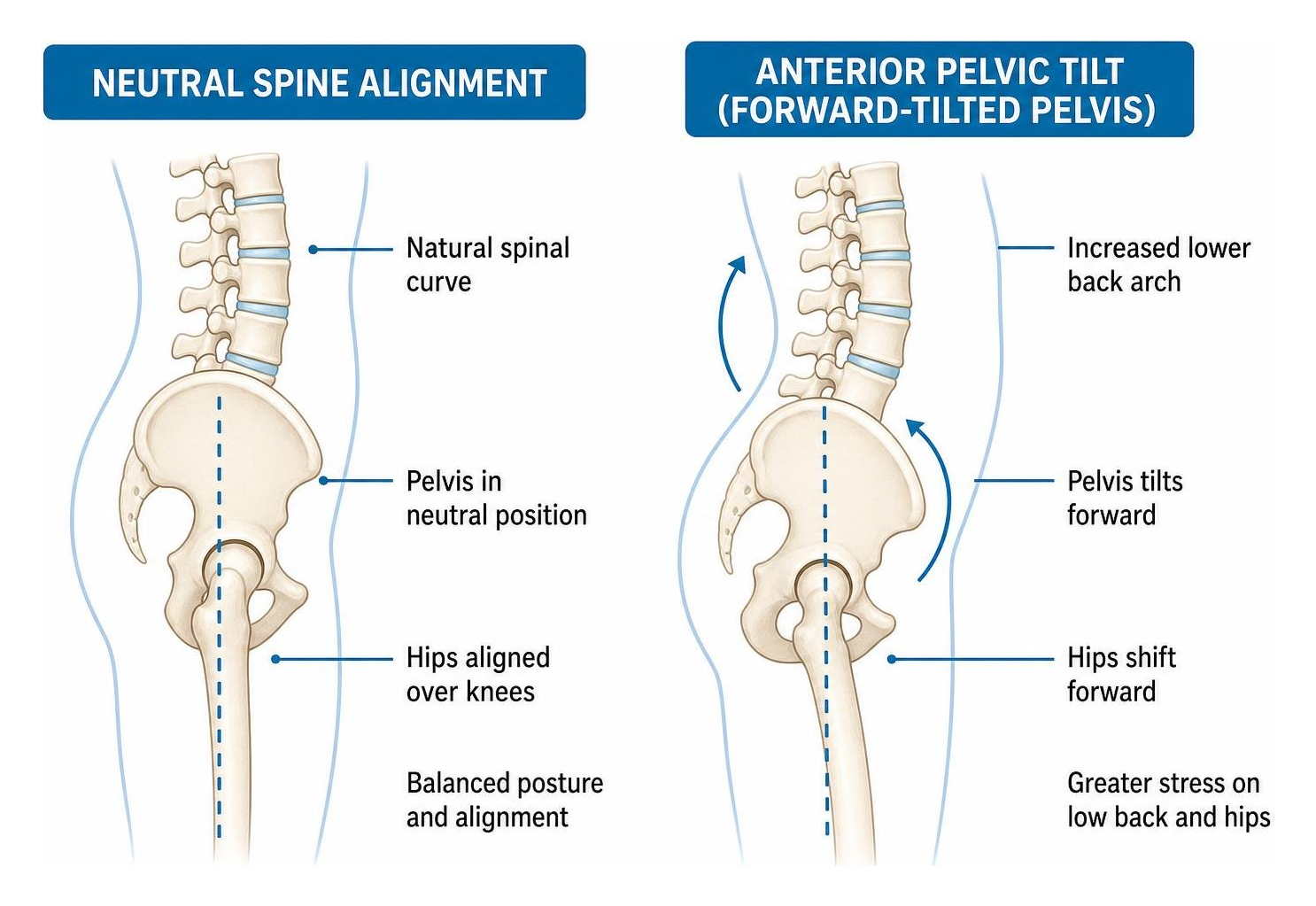
Your pelvis acts as the central foundation connecting your upper body to your legs. When your pelvis rests in a neutral position, your spine maintains a gentle, balanced curve that distributes your body weight evenly across your joints.
In a forward-tipped position, commonly known as anterior pelvic tilt, the front of the pelvic bone rotates downward toward your thighs while the back part lifts upward. This shift pulls on the base of the spine, exaggerating the natural inward curve of your lower back (creating an overly arched lower spine).
When the pelvis tips forward, the relationship between your hip joints and your lower spine changes. The hip flexor muscles at the front of your hips shorten, while the gluteal muscles in your buttocks and the deep abdominal muscles in your belly get stretched out and have a harder time activating during movement.
Anterior vs. Posterior Pelvic Tilt
Pelvic alignment exists along a natural spectrum. The two most common postural shifts are forward tilt and backward tilt, which create opposite effects on your lower back and hip joints.
| Feature | Anterior Pelvic Tilt (Forward Tilt) | Posterior Pelvic Tilt (Backward Tuck) |
|---|---|---|
| Pelvis Position | Tipped forward and down toward the toes | Tucked backward and down toward the heels |
| Lower Back Curve | Exaggerated inward arch | Flattened or rounded lower back |
| Buttock Appearance | Shifted backward and more prominent | Tucked under or “flat” appearance |
| Abdominal Profile | Lower abdomen pushed forward | Flat or slightly compressed abdomen |
| Tight Muscles | Front hip flexors, front thighs, lower back | Hamstrings, deep buttocks, upper abdominals |
| Weak Muscles | Glutes, deep core abdominals | Front hip flexors, lower back extensors |
Understanding which direction your pelvis tilts helps ensure you pick the right exercises to restore comfortable movement.
Common Daily Causes of Anterior Pelvic Tilt
Modern daily life creates the ideal environment for a forward-tipped pelvis. The most common everyday contributors include:
- Sedentary Desk Jobs: Spending hours sitting at a desk keeps your hips bent in a shortened position throughout the day, leading to adaptive tightness in the front thighs.
- Extended Commuting and Couch Rest: Long drives around Central Florida combined with evening screen time keep hip joints folded for extended periods.
- Core and Glute Disuse: When you sit, your buttock and abdominal muscles remain completely relaxed, causing them to lose endurance over time.
- Pregnancy Posture Adaptations: Carrying extra weight at the front of the abdomen naturally shifts your center of gravity forward, pulling the pelvis with it.
- Repetitive Athletic Strain: Sports involving sprinting, kicking, or rapid acceleration can lead to overdeveloped front hip muscles relative to the back of the body, which helps in identifying common hip pain causes.
Signs, Symptoms, and Impact on Daily Movement

Many people with a forward pelvic tilt feel completely fine and experience no daily limitations. However, when the tilt becomes pronounced or lacks dynamic muscle support, it can trigger noticeable physical sensations:
- Lower Back Stiffness: A tight, compressed ache in the lower spine, especially after standing for long periods or walking through theme parks.
- Tightness in Front Hips and Thighs: A pulling sensation across the front crease of the hip when standing tall or stepping backward.
- Standing Fatigue: Tired, overworked muscles in the lower back after standing at work, preparing meals, or socializing.
- Visible Abdominal Protrusion: The lower belly pushing forward even in lean, active individuals because the forward-angled pelvis allows abdominal contents to rest forward.
- Restricted Hip Extension: Difficulty comfortably extending your leg straight behind you during running, walking, or golf swings.
If your discomfort is getting worse or limiting your routine, learning if lower back pain is serious can help you decide when to seek professional care.
Muscle Imbalances: Tight vs. Weak Muscle Groups
A forward pelvic tilt typically follows a distinct pattern of muscle imbalances across the hips and trunk:
- Overactive and Tight Muscles: The deep hip flexors at the front of the pelvis and the large thigh muscle running down the front of the leg become shortened. The lower back muscles along the spine also work overtime to keep your torso upright.
- Underactive and Weak Muscles: The main buttock muscles and deep abdominal core muscles (the natural corset muscles of the belly) become lengthened and underused.
This push-and-pull relationship can cause localized discomfort, making identifying where hip flexor pain is felt an important step in targeted recovery.
Is Pelvic Tilt Always the Cause of Back Pain?
A very common myth is that any visible forward tilt of the pelvis guarantees back pain. In reality, a mild forward tilt is completely normal for most adults.
Pain usually arises not from the angle of your bones, but from how well your muscles tolerate daily physical loads. When back muscles must work constantly to support a tired core, they become fatigued and sensitive. If you experience discomfort that travels down past your hips, evaluating hip pain radiating down the leg can help determine if nerve irritation or joint inflammation is playing a role, as detailed in this clinical reference on anterior pelvic tilt.
How to Test and Assess Pelvic Alignment
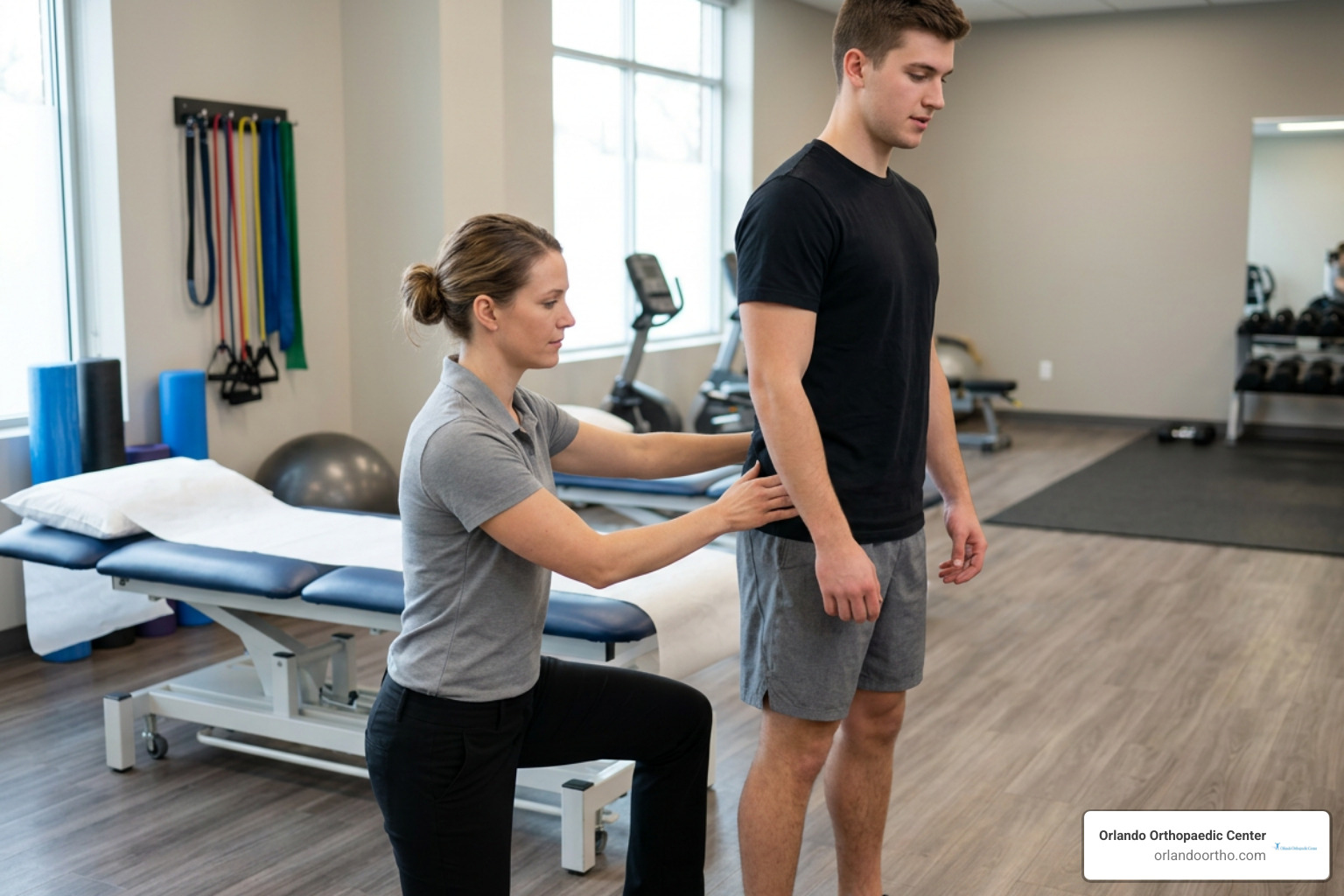
Assessing pelvic positioning involves looking at how your body rests naturally and how your hips and spine move together during daily activities.
At-Home Checks for Anterior Pelvic Tilt
You can perform a few simple self-checks at home to get a general sense of your pelvic posture:
- The Wall-Stand Check: Stand with your head, upper back, and buttocks flat against a smooth wall, with your heels about three inches away. Slide your flat hand behind the small of your lower back. If you have plenty of room to slide an entire arm or thick object through without touching your lower back, you may have an increased lower back arch from a forward tilt.
- The Mirror Waistband Check: Stand sideways in front of a full-length mirror wearing a belt or fitted waistband. Look at the line of the waistband. If the front buckle drops significantly lower than the back of your pants, your pelvis is tipped forward.
- The Bench Thigh Check: Lie flat on your back on a sturdy table or bench with your knees hanging off the edge. Pull one knee up to your chest with both hands. If the thigh of the leg resting on the bench lifts up off the surface instead of hanging naturally, your front hip flexors are tight.
Professional Movement and Posture Evaluation
While home checks are helpful for body awareness, an in-person physical assessment provides a complete picture of your joint health. During an evaluation, a specialist will observe:
- Gait and Walking Mechanics: How your pelvis and hips shift as you step, land, and push off the ground.
- Dynamic Hip Mobility: Your ability to move your hip joints through a full range of motion without compensating through your lower spine.
- Core Stability and Muscle Activation: Whether your glutes and deep abdominal muscles fire properly during functional movements like squats and single-leg balances.
If you want an expert look at your movement patterns, scheduling a comprehensive core rehab evaluation can help pinpoint specific muscular imbalances.
Practical Exercises, Stretches, and Posture Fixes
Managing a forward pelvic tilt involves a balanced approach: loosening tight muscles at the front of your hips and lower back while waking up the stabilizing muscles in your glutes and abdomen. Exploring proven strategies to relieve hip pain can help you create a sustainable, pain-free daily routine.
Targeted Stretches for Tight Hip Muscles
Perform these stretches gently, holding each for 30 to 45 seconds without bouncing.
-
Half-Kneeling Hip Flexor Stretch:
- Kneel on one knee (use a folded towel for cushion) with your other foot flat on the floor in front of you, forming 90-degree angles at both knees.
- Gently tuck your tailbone underneath you (flattening your lower back) and squeeze the glute on your kneeling side.
- Shift your weight slightly forward until you feel a comfortable stretch across the front crease of your kneeling hip.
- Hold for 30 seconds, breathe deeply, and switch sides.
-
Standing Quad and Hip Stretch:
- Stand tall near a wall or sturdy chair for balance.
- Bend one knee, reach back, and hold your ankle with your hand.
- Keep your knees close together and gently tuck your pelvis under without arching your lower back.
- Hold for 30 seconds per leg.
-
Restorative Child’s Pose:
- Kneel on a mat with your knees wide and big toes touching.
- Sit your hips back toward your heels, fold forward, and rest your forehead on the floor with arms outstretched.
- Breathe deeply into your lower back to release muscle tension along your spine.
Strengthening Exercises for Glutes and Core
Build stability and endurance by practicing these exercises 3 to 4 days per week:
- Glute Bridges: Lie on your back with your knees bent and feet flat on the floor, hip-width apart. Flatten your lower back against the floor, squeeze your buttocks, and lift your hips until your thighs and torso form a straight line. Hold for 3 seconds at the top, lower down slowly, and repeat for 10 to 15 repetitions.
- Dead Bugs: Lie on your back with arms reaching toward the ceiling and knees bent at 90 degrees in the air. Press your lower back firmly into the floor. Slowly lower your right arm overhead while extending your left leg straight out toward the floor. Return to start and alternate sides for 8 to 10 controlled repetitions per side.
- Bodyweight Box Squats: Stand in front of a chair with feet shoulder-width apart. Keeping your chest up and your core engaged, sit your hips back until you tap the chair, then drive through your heels and squeeze your glutes to stand tall. Complete 10 to 12 repetitions.
- Forearm Plank: Rest on your forearms and toes, keeping your body in a straight line from head to heels. Squeeze your abdominal muscles and glutes to prevent your lower back from sagging. Hold for 20 to 40 seconds.
For an individualized routine tailored to your fitness level, consider exploring personalized physical therapy services.
When to Consult an Orthopaedic Specialist
Most mild pelvic posture issues respond well to simple daily movement adjustments and home exercises. However, you should schedule a clinical visit if you notice:
- Discomfort lasting more than a few weeks despite consistent stretching and strengthening.
- Pain that interferes with sleep, walking, work, or sports.
- Numbness, tingling, or “pins and needles” traveling into your buttocks, groin, or down your legs.
- Sudden muscle weakness in your legs, knees, or feet.
- Pain that began following a fall, sports collision, or traumatic injury.
If you are uncertain about the cause of your discomfort, evaluating whether hip pain is serious will help you make an informed choice about getting professional care.
Frequently Asked Questions About Anterior Pelvic Tilt
How long does it take to correct anterior pelvic tilt?
Most people notice meaningful improvements in muscle comfort, hip flexibility, and standing endurance within 6 to 12 weeks of consistent corrective exercise. Long-term posture habits take time to adjust, so staying consistent with daily movement breaks and core strengthening is key.
Can you fix anterior pelvic tilt on your own at home?
Yes, mild cases that cause no sharp pain often improve with daily stretching of the front hips, regular glute activation, and reducing unbroken sitting time. If symptoms do not improve after several weeks, a physical therapist can help fine-tune your technique.
Does anterior pelvic tilt require surgery?
No. A forward pelvic tilt is a positional movement pattern and does not require surgery. Treatment focuses on non-surgical physical therapy, strengthening, and mobility training. Surgery is only considered if there is an underlying structural spine or joint condition causing severe nerve compression.
Conclusion
Understanding your pelvic posture is an empowering step toward protecting your long-term joint health and moving with ease. By balancing tight hip flexors with active, supportive glute and core strength, you can take pressure off your lower spine and get back to your favorite sports, workouts, and daily routines.
At Orlando Orthopaedic Center, our surgeons treat bones, joints, and soft tissue. If persistent lower back tightness or hip discomfort is holding you back, reach out to our team to explore specialized orthopaedic care for fixing anterior pelvic tilt and get a personalized recovery plan tailored to your lifestyle.