Understanding Psoriatic Arthritis and Your Lower Back Pain
When Psoriatic Arthritis May Be Causing Your Lower Back Pain
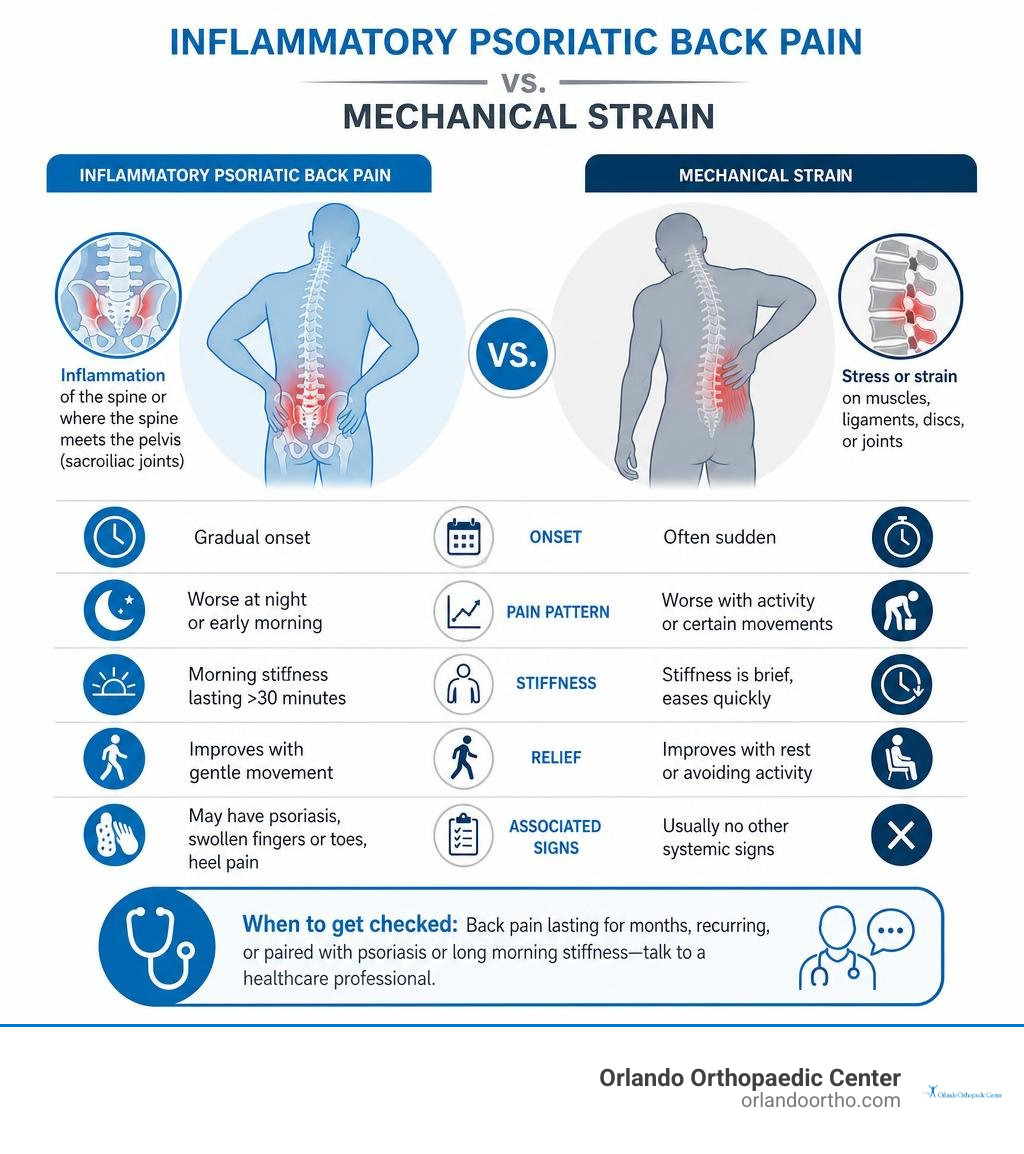
Back pain from psoriatic arthritis can feel different from a pulled muscle or everyday wear and tear. It often builds gradually, causes stiffness after sleep or sitting still, may wake you at night, and tends to ease with gentle movement rather than rest.
Psoriatic arthritis can inflame the joints of the spine or the joints where the spine meets the pelvis. This is called axial involvement, meaning the disease is affecting the back, neck, or pelvic area. It can make walking, bending, driving, working, sleeping, or returning to golf, tennis, and other activities more difficult.
If back pain lasts for months, keeps returning, or comes with psoriasis, swollen fingers or toes, heel pain, or long-lasting morning stiffness, it is worth getting checked. Early care can help protect mobility and identify whether the pain is inflammatory or due to a mechanical problem such as a strain, disc wear, or arthritis from aging.
Orlando Orthopaedic Center’s providers treat bones, joints, and soft tissue. A thorough evaluation can help direct you to the right next step for persistent back pain.
How Psoriatic Disease Causes Spinal and Pelvic Discomfort
When most people think of psoriatic disease, they imagine flaky, itchy skin patches. However, psoriatic arthritis is an immune-mediated condition—a situation where your body’s defense system mistakenly attacks healthy joint tissue. When this immune response targets the spine, it can lead to Arthritis of the Spine, causing deep aching, restricted bending, and persistent tightness throughout your back.
Inside your spinal column, vertebrae—the individual bones stacked to make up your backbone—are connected by small joints and surrounded by tough ligaments. In psoriatic disease, inflammation attacks the entheses, which are the specialized spots where ligaments and tendons attach directly to bone. When these attachment points become inflamed, the body tries to heal itself by laying down new bone tissue. Over time, this reaction can cause stiffness, tender spots along the spinal column, and significant discomfort during normal daily tasks like driving down I-4 or unloading groceries. For more background on this connection, review the research on how PsA causes back pain.
Sacroiliac Joint Inflammation and Pelvic Aches
One of the most frequent sources of discomfort in psoriatic spinal disease is inflammation of the sacroiliac joints—the sturdy connections that link the base of your spine to your pelvis. When these areas flare up, it causes Sacroiliitis and SI Joint Pain, which typically feels like a dull, heavy ache deep in the buttocks, lower back, or upper thighs.
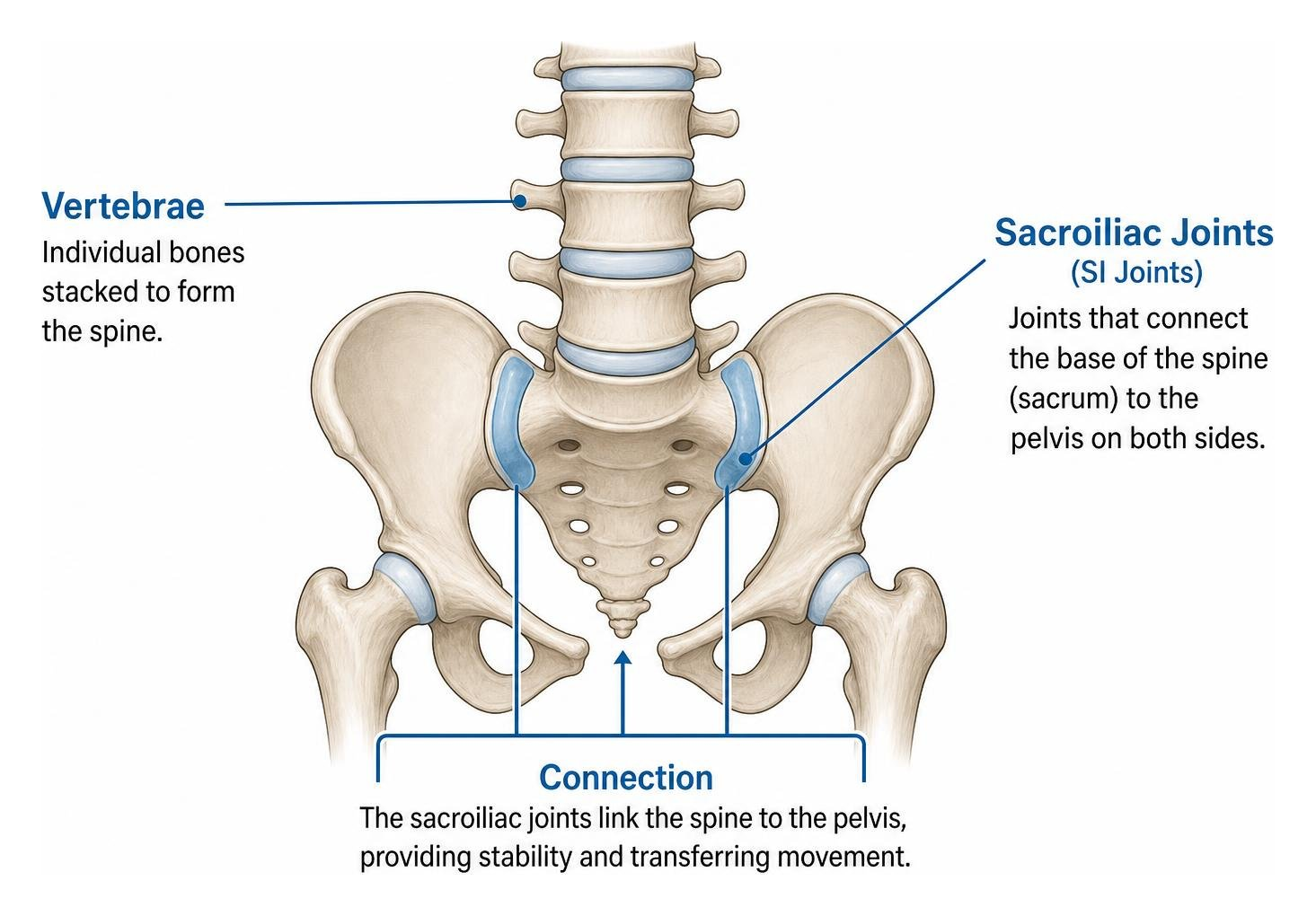
Unlike standard back strains that might hurt on both sides evenly, this joint irritation often causes one-sided or alternating buttock discomfort. You might notice a sharp ache when stepping out of bed, difficulty standing on one leg to put on shoes, or a feeling of pelvic tightness when walking around the neighborhood or standing in long theme park lines.
Early Signs of Back Pain from Psoriatic Arthritis
Recognizing the early warning signs helps you seek help before spinal stiffness begins to limit your everyday routines. Common early indicators include:
- Gradual discomfort: The ache creeps up slowly over several months rather than starting suddenly after a heavy lift.
- Morning stiffness: Waking up feeling rigid, taking thirty minutes or more of warm showering and moving around before your back loosens up.
- Sleep disruption: Waking up in the second half of the night with a deep, throbbing lower back ache that forces you to change positions or walk around.
- Relief with activity: Feeling noticeably better after light walking or gentle stretches, whereas resting on the couch makes your back tighter.
- Reduced flexibility: Finding it harder to check your blind spots while driving or reach down to tie your running shoes.
Identifying Back Pain from Psoriatic Arthritis vs. Mechanical Strain
Telling the difference between inflammatory back symptoms and mechanical strain is essential for getting the proper treatment. Most people experience mechanical back pain at some point—often caused by lifting a heavy box incorrectly, twisting suddenly during a weekend softball game, or general wear on spinal discs over time.
Mechanical pain usually starts abruptly, sharpens with bending or lifting, and improves when you lie down to rest. Inflammatory spinal pain does the exact opposite: it thrives on stillness and eases with light motion. If you are trying to determine whether Is Back Pain Serious?, looking at how your back responds to rest versus activity provides a critical clue.
| Symptom Feature | Inflammatory Back Pain (Psoriatic) | Mechanical Back Strain |
|---|---|---|
| Onset | Gradual, building over weeks or months | Sudden, often linked to an injury or lift |
| Morning Stiffness | Lasts longer than 30 to 45 minutes | Brief, usually fades within a few minutes |
| Effect of Rest | Makes stiffness and aching worse | Helps relieve pressure and eases pain |
| Effect of Movement | Improves flexibility and reduces pain | Often aggravates sharp pain and spasms |
| Nighttime Symptoms | Frequently wakes you in the early morning | Rarely wakes you, unless turning awkwardly |
| Associated Signs | Nail pitting, skin plaques, swollen toes | Local muscle tenderness, no skin signs |
How Spinal Psoriatic Disease Differs from Ankylosing Spondylitis and Disc Wear
While both psoriatic arthritis and ankylosing spondylitis are related inflammatory conditions, they behave differently in your spine. Ankylosing spondylitis usually begins symmetrically in both sacroiliac joints and moves steadily upward through the spine. In contrast, psoriatic spinal disease is often asymmetrical, skipping sections of the back and sometimes causing isolated stiffness in the neck or upper spine without severely impacting the lower pelvis first.
Furthermore, psoriatic spinal symptoms are distinct from ordinary degenerative disc wear—the gradual thinning of spinal shock absorbers as we age. While disc wear causes localized creaking, bone spurring, and mechanical pressure during high-impact movement, psoriatic disease involves systemic inflammation that can affect multiple soft tissue connections throughout the body. For an in-depth clinical look at these differences, explore this medical overview of inflammatory back pain.
Diagnosing Axial Spine Involvement and Joint Inflammation
Arriving at an accurate diagnosis begins with a comprehensive clinical evaluation. During your visit, your specialist will discuss your complete symptom history, look for subtle skin or nail changes, and perform hands-on mobility checks. These include measuring how well your lower back flexes forward, testing your hip range of motion, and checking your reflexes to ensure spinal nerves are functioning without compression.

Your care team may also recommend blood tests to measure overall inflammation levels in the body or look for genetic markers that sometimes travel alongside inflammatory arthritis. However, because blood tests can occasionally come back normal even when joints are irritated, physical examinations and diagnostic imaging play a central role.
Advanced Imaging and Non-Invasive Diagnostic Testing
To clearly see what is happening inside your spine and pelvis, our team utilizes advanced diagnostic imaging through our dedicated Spine Care and Conditions team:
- Digital X-rays: Provide clear images of bone structure, revealing whether there is joint narrowing, abnormal bone spur formation, or structural alignment changes in the spine and pelvis.
- Magnetic Resonance Imaging (MRI): Uses magnetic fields and radio waves to create detailed pictures of soft tissues and bones. An MRI can detect early bone swelling and active joint inflammation long before permanent structural changes appear on standard X-rays.
Comprehensive Care Options for Lasting Relief
Managing back pain caused by psoriatic arthritis requires a coordinated approach designed to calm inflammation, protect your joints, and keep you active. Because every patient experiences symptoms differently, an effective care plan brings together targeted medications, hands-on physical therapy, and interventional Pain Management Services.
Working alongside specialized providers allows you to address both structural spinal alignment and systemic joint discomfort simultaneously. Discover Why See a Pain Management Specialist at an Orthopaedic Center to learn how focused pain therapies seamlessly integrate with comprehensive orthopaedic rehabilitation.
Targeted Treatments for Back Pain from Psoriatic Arthritis
Modern medicine offers several effective pathways to manage spinal inflammation and prevent long-term joint changes:
- Non-Steroidal Anti-Inflammatory Drugs (NSAIDs): Often used as an initial step to reduce daily pain and calm tissue irritation.
- Biologic Therapies: Advanced prescription medications that specifically target the proteins causing your immune system to overreact, helping halt inflammation in both the skin and spinal joints.
- Targeted Injections: Fluoroscopic (real-time X-ray guided) injections placed directly into irritated sacroiliac joints to deliver concentrated anti-inflammatory relief right where it hurts.
- Specialized Physical Therapy: Tailored strengthening programs focused on core stability, spinal extension, and posture training to take mechanical stress off inflamed joints.
At-Home Strategies and Low-Impact Exercise for Spine Mobility
Staying active is one of the most powerful tools for managing inflammatory back stiffness. Gentle, consistent movement increases blood flow, lubricates spinal joints, and prevents surrounding muscles from tightening up.
Here are several daily habits and low-impact activities to help maintain your mobility:
- Swimming and Water Aerobics: The natural buoyancy of water takes gravitational pressure off your spine while providing gentle resistance to build back and core strength.
- Walking Routines: A daily brisk walk around a local park or neighborhood keeps your pelvic joints moving freely and reduces morning stiffness.
- Pelvic Tilts and Gentle Bridges: Simple floor exercises that engage your lower abdominal muscles and support the base of your spine.
- Hamstring and Hip Flexor Stretches: Keeping your leg muscles flexible prevents them from pulling on your pelvis and worsening lower back tension.
- Heat Therapy: Applying a heating pad or taking a warm morning shower helps loosen stiff spinal joints before you start your daily routine.
- Ergonomic Workspace Adjustments: Using a supportive chair with lumbar support and alternating between sitting and standing throughout the workday prevents spinal stiffness from locking in.
Frequently Asked Questions About Psoriatic Spine Pain
Can psoriatic arthritis cause lower back pain without skin rashes?
Yes. While many people develop skin plaques before experiencing joint pain, some individuals develop back pain and joint inflammation years before any visible rash appears. In other cases, skin patches may be hidden in hard-to-see areas like the scalp, behind the ears, or inside the navel. If you have a family history of psoriasis and experience chronic, inflammatory back pain, an orthopaedic evaluation can help uncover the root cause.
How do I know if my back pain is inflammatory or muscle-related?
The biggest clues are timing and how your back responds to activity. Muscle strains typically happen suddenly, feel sore when you move or bend, and improve when you rest. Inflammatory back pain develops slowly over months, causes severe morning stiffness that lasts longer than 30 minutes, often wakes you up in the middle of the night, and feels significantly better after you get up and move around.
What daily exercises help reduce stiffness in the lower back?
Low-impact exercises that promote continuous, gentle motion work best. Aquatic therapy, regular walking, gentle yoga, pelvic tilts, and light core-strengthening exercises help maintain spinal mobility without placing harsh impact on your joints. Always consult with a physical therapist to ensure your exercise routine matches your specific joint health needs.
Conclusion
Living with chronic lower back stiffness can make everyday life feel frustrating, but you do not have to navigate it alone. Recognizing whether your symptoms stem from mechanical strain or an underlying inflammatory condition is the first step toward lasting comfort. Orlando Orthopaedic Center’s surgeons treat bones, joints, and soft tissue, offering comprehensive care to help you maintain mobility and get back to doing what you love.
If persistent back stiffness is holding you back from your favorite Central Florida activities, take control of your spinal health today by scheduling a consultation for comprehensive spine care.