Simple Physical Therapy Stretches for Lower Back Relief
Gentle Back Pain Stretches for Relief
For a stiff, aching lower back, start with gentle movement, not a deep stretch. Lie on your back with your knees bent. Slowly bring one knee toward your chest, hold for 5 to 10 seconds, then switch sides. Try 5 repetitions per leg. You can also gently tilt your pelvis while lying in the same position. Move only as far as feels comfortable.
If your pain began with a recent injury, keep movements small and skip anything that makes it worse. Stop stretching if you feel sharp pain or pain shooting down a leg. Stretching can ease stiffness, but ongoing pain may need a physical therapy plan tailored to you.
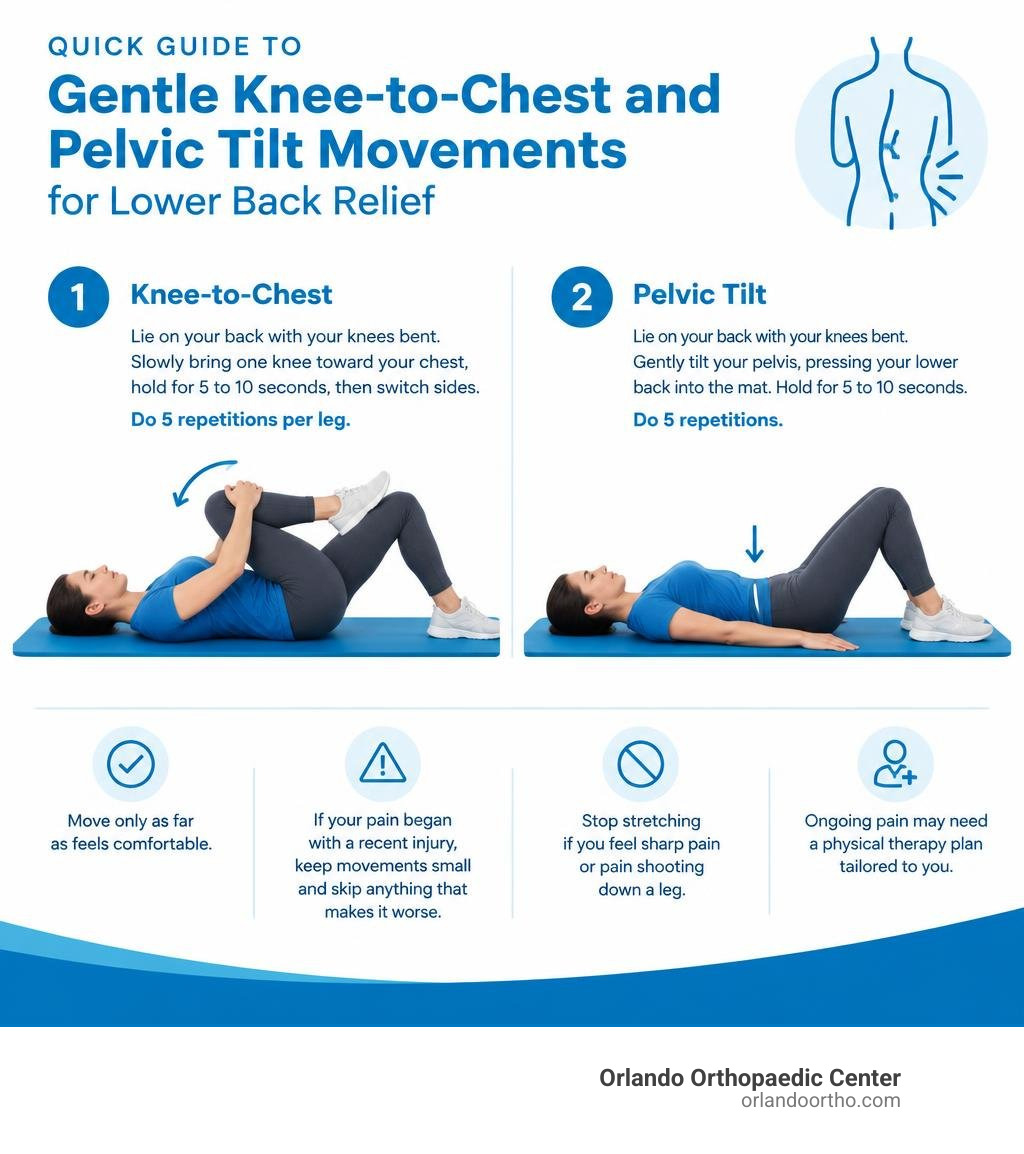
Simple guide to back pain stretches for relief:
- back pain arthritis treatment
- back pain from psoriatic arthritis
- back pain from rheumatoid arthritis
Understanding Your Back Pain: Acute vs. Chronic and Pain Types
Before jumping into a full stretching routine, it helps to understand what is happening in your spine. Back pain generally falls into two timeframes: acute and chronic. Acute back pain comes on suddenly, often after lifting something heavy, twisting awkwardly, or overdoing it during weekend yard work. It typically resolves within a few days to several weeks as irritated tissues heal. Chronic back pain lasts longer than three months, persisting well past the normal healing window and often requiring a structured management plan.
The underlying source of your discomfort also dictates how your body responds to movement. Mechanical strains involve pulled muscles or irritated ligaments, while nerve compression involves pressure on spinal nerves. If you suspect an injury like identifying a herniated disc, or are dealing with sharp leg symptoms after understanding what causes sciatica, certain forward-bending stretches may actually worsen nerve irritation.
| Pain Category | Common Sensations | Typical Causes | How Stretching Responds |
|---|---|---|---|
| Nociceptive (Tissue/Muscle) | Dull ache, localized throbbing, muscle tightness | Muscle strain, ligament sprain, joint stiffness | Responds very well to gentle, rhythmic mobility exercises |
| Neuropathic (Nerve) | Sharp, burning, electric shocks, tingling down the leg | Herniated disc, spinal stenosis, piriformis syndrome | Requires cautious nerve-gliding; aggressive pulling can aggravate symptoms |
Nociceptive vs. Neuropathic Pain
Nociceptive pain originates in your muscles, tendons, ligaments, and joints. It often feels like a persistent, dull ache or localized soreness that gets worse when you bend or twist. When muscles tighten up to guard an injured area, gentle physical therapy stretches help improve blood flow and ease those stubborn spasms.
Neuropathic pain, on the other hand, involves irritated sensory pathways and compressed spinal nerve roots. Rather than a localized muscular ache, it produces burning sensations, electric-like jolts, numbness, or pins and needles that travel through your glutes, down your thigh, or into your calf. When evaluating spinal stenosis or disc bulges, nerves are already under mechanical tension. Forcing a deep stretch on an irritated nerve can cause inflammation to spike, which is why nerve-related pain demands specialized, careful movement.
When Stretching Helps vs. When to Rest
During the first 24 to 48 hours of an acute back spasm, your body is in an active inflammatory phase. Aggressive stretching can overtax fragile tissues and trigger protective muscle guarding. In this initial stage, short rest periods, gentle walking on flat surfaces, and ice therapy are usually best.
Once severe spasms ease, light mobility helps prevent stiffness and promotes tissue remodeling. If you are unsure whether your symptoms allow for home exercise, assessing if back pain is serious can help you decide between self-care and professional evaluation.
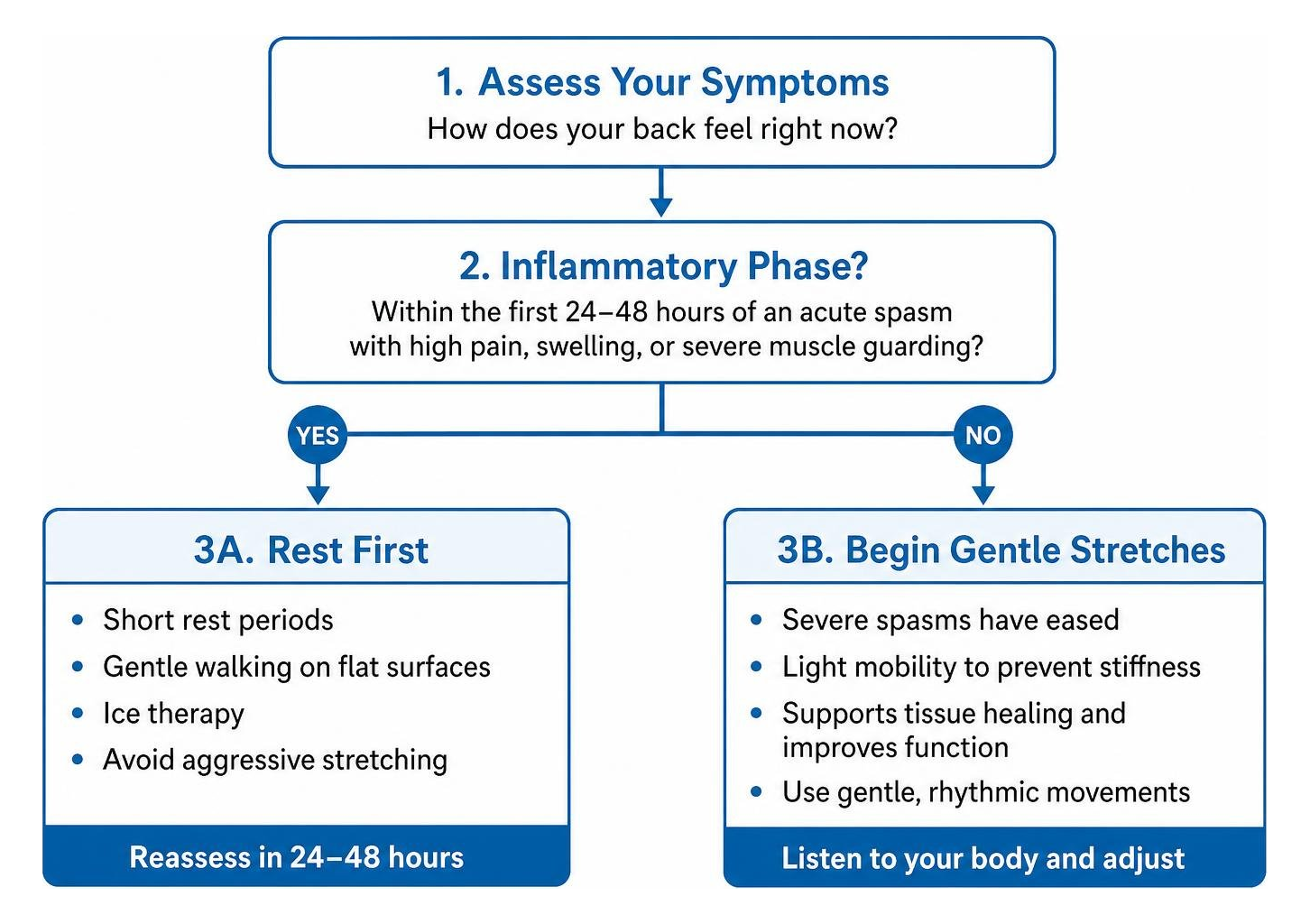
Step-by-Step Guide: Best Back Pain Stretches for Relief
When you are ready to begin, moving through a balanced sequence helps relieve tension across your lumbar spine (lower back), hips, and legs. Integrating evidence-based exercises for lower back pain relief keeps your joints supple without overloading spinal discs.
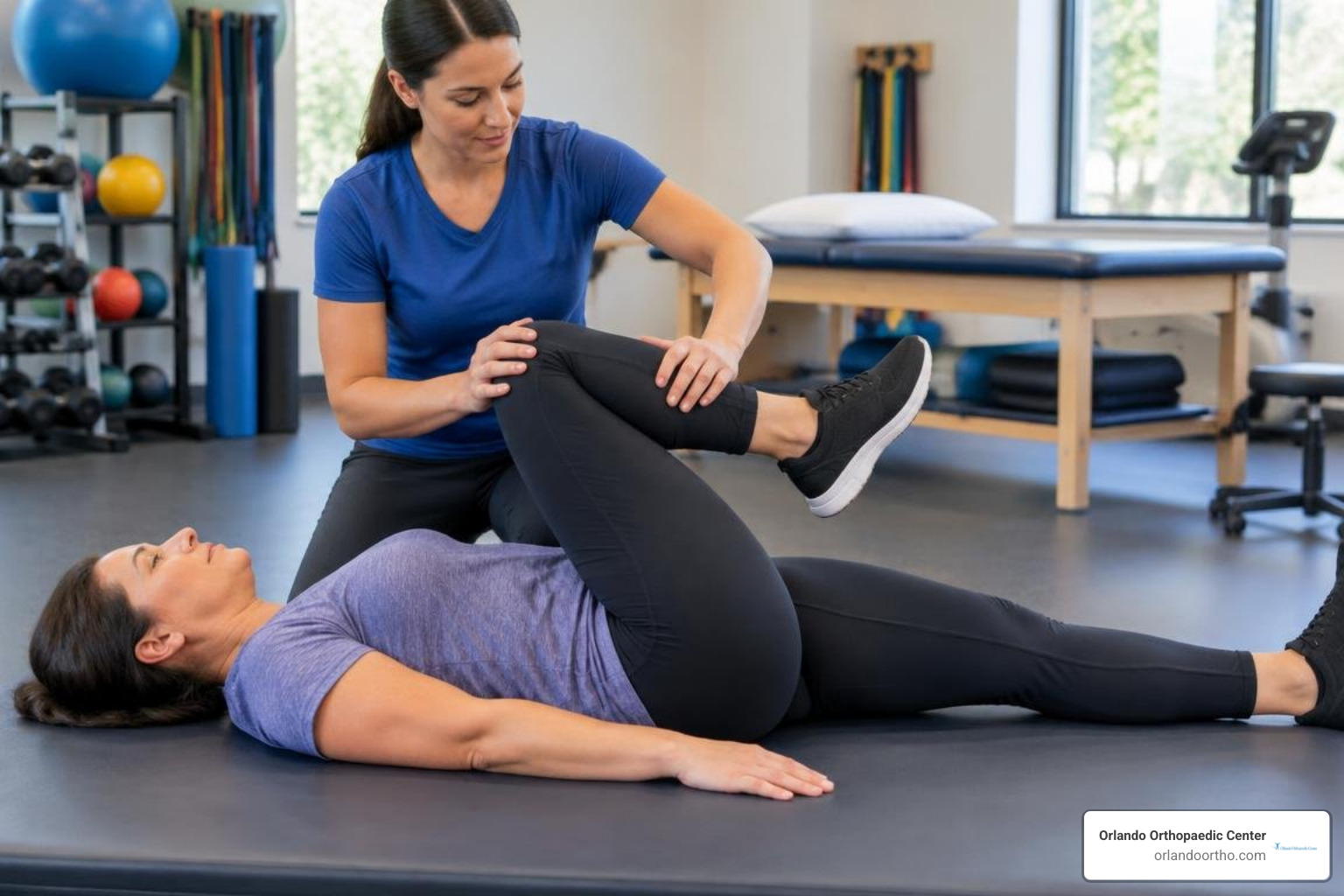
Essential Back Pain Stretches for Relief to Do at Home
You can perform these core movements on a firm mattress or a yoga mat on the floor. Following a structured daily back stretching routine guidance keeps you consistent while protecting your spine:
- Knee-to-Chest Stretch: Lie flat on your back with knees bent and feet flat on the floor. Use both hands to gently pull your right knee toward your chest until you feel a comfortable stretch in your lower back and glute. Hold for 20 to 30 seconds, lower slowly, and repeat on the left side. Complete 2 to 3 sets per leg.
- Cat-Cow Movement: Start on your hands and knees with your wrists under your shoulders and knees under your hips. Inhale as you gently drop your belly toward the floor and look slightly upward (Cow). Exhale as you slowly arch your spine toward the ceiling, tucking your chin toward your chest (Cat). Flow smoothly between these two shapes 8 to 10 times.
- Child’s Pose: From your hands and knees, push your hips back toward your heels while walking your hands forward. Rest your forehead on the mat and allow your lower back to gently lengthen. Hold for 30 to 45 seconds while taking slow, deep breaths.
- Supine Spinal Twist: Lie on your back with arms extended out to the sides in a “T” shape and knees bent. Slowly lower both knees to the right side while keeping both shoulders flat on the floor. Hold for 20 seconds, return to the center, and repeat on the left side.
Targeting the Hips and Glutes to Ease Lumbar Tension
Your lower back works as part of an interconnected kinetic chain with your pelvis and legs. Tight hip flexors and shortened hamstrings can pull your pelvis out of alignment, contributing to excess lumbar arching. Incorporating movements focused on correcting anterior pelvic tilt relieves that constant mechanical tug on your lower back:
- Piriformis (Figure-4) Stretch: Lie on your back with knees bent. Cross your right ankle over your left knee. Reach through and grasp behind your left thigh, gently pulling your left leg toward your chest until you feel a deep stretch in your right outer hip and buttock. Hold for 20 to 30 seconds, then switch sides.
- Low Lunge Hip Flexor Stretch: Kneel on your left knee and step your right foot forward so your right knee is bent at a 90-degree angle. Keep your torso upright and gently shift your weight forward until you feel a stretch along the front of your left hip and thigh. Hold for 20 to 30 seconds and repeat on the opposite side.
- Seated Hamstring Stretch: Sit on the edge of a sturdy chair. Extend your right leg straight out with your heel on the floor and toes pointed upward. Keeping your spine tall and straight, hinge forward at your hips until you feel a gentle pull down the back of your right thigh. Avoid rounding your lower back. Hold for 20 to 30 seconds per leg.
Modifying Back Pain Stretches for Relief During Acute Flare-Ups
When pain flares up, modify your movements to stay within a pain-free range of motion:
- Focus on Neutral Spine: Avoid deep forward folds or extreme backward bending.
- Use Gentle Pelvic Tilts: Lie on your back with knees bent and gently flatten your lower back against the floor by tightening your abdominal muscles. Hold for 5 seconds and release without lifting your hips off the ground.
- Incorporate Diaphragmatic Breathing: Take slow, deep breaths into your belly to help calm your nervous system and release involuntary muscle spasms.
How to Stretch Safely: Avoiding Common Mistakes and Overstretching
Stretching should never turn into an aggressive tug-of-war with your muscles. One of the most common mistakes is bouncing at the end of a stretch (ballistic stretching), which triggers a protective contraction in the muscle and increases your risk of microtears.
Always ease into each position smoothly, hold steadily, and breathe naturally. When sorting through advice, debunking back pain myths helps you steer clear of aggressive, high-risk movements that promise overnight cures but often lead to setbacks.
Physical Therapy vs. Unsupervised Stretching
While general home mobility exercises are fantastic for daily maintenance, they do not replace a targeted rehabilitation plan. A licensed physical therapist performs a thorough biomechanical evaluation to identify specific muscle weaknesses, joint restrictions, and postural imbalances.
For instance, if your lower back discomfort is actually driven by sacroiliac joint dysfunction, standard twisting exercises might irritate the area further. In such cases, focused physical therapy care for addressing sacroiliitis SI joint pain stabilizes the pelvis using customized core and glute strengthening alongside joint-specific mobility work.
Complementary Lifestyle Habits and Non-Drug Pain Relief
Stretching works best when paired with everyday healthy habits that reduce inflammation and support spine health:
- Heat and Cold Therapy: Apply an ice pack for 15 to 20 minutes during acute flare-ups to calm inflammation and numb sharp pain. Use a heating pad before stretching to relax stiff, tight muscles and increase local blood circulation.
- Low-Impact Walking: A daily 15-to-20-minute walk keeps your spine mobile, improves spinal disc hydration, and stimulates the release of natural endorphins.
- Sleep Support: Sleep on a supportive mattress with a pillow between your knees (if sleeping on your side) or under your knees (if sleeping on your back) to keep your spine in a neutral position overnight.
- Stress Management: Mental stress and anxiety cause involuntary muscle tension throughout your neck and lower back. Incorporating relaxation techniques, mindfulness, and slow breathing helps break the cycle of stress-induced muscle guarding.
- Anti-Inflammatory Nutrition: Eating a balanced diet rich in leafy greens, lean proteins, omega-3 fatty acids, and plenty of water supports soft tissue recovery and joint health.
Frequently Asked Questions About Lower Back Stretches
How often should I perform stretches for lower back pain?
For general stiffness and chronic tightness, doing a gentle 5-to-10-minute routine once or twice daily works best. Consistency is far more effective than doing a long, intense stretching session once a week. During acute flare-ups, reduce the frequency and stick to small, gentle movements like pelvic tilts and knee-to-chest holds.
Should I continue stretching if I feel sharp or shooting pain?
No. You should never push through sharp, stabbing, or radiating pain. A mild, comfortable pulling sensation in tight muscles is normal, but electric shocks, numbness, or pain shooting down your leg indicate nerve irritation. Stop the movement immediately and rest in a comfortable position.
When should I see a spine specialist instead of stretching at home?
You should schedule an evaluation with an orthopaedic spine specialist if your back pain lasts longer than two to three weeks without improvement, worsens over time, or is accompanied by progressive leg weakness, numbness, or difficulty standing and walking. If you want to check your symptoms, taking an online back pain quiz can help you determine whether it is time for a specialist evaluation.
Conclusion
Incorporating simple physical therapy stretches into your daily routine is one of the safest, most effective ways to relieve muscle tension, improve spinal mobility, and prevent future flare-ups. Remember to move slowly, respect your body’s limits, and pair your mobility work with daily walking, good posture, and proper rest.
If persistent back pain or radiating leg discomfort interferes with your work, sleep, or favorite activities, our team at Orlando Orthopaedic Center is here to help. We offer comprehensive spine care across Central Florida, including 24/7 virtual access and walk-in clinic care for rapid evaluation. When home remedies are not enough, schedule an appointment with a spine specialist to get a personalized treatment and recovery plan.